


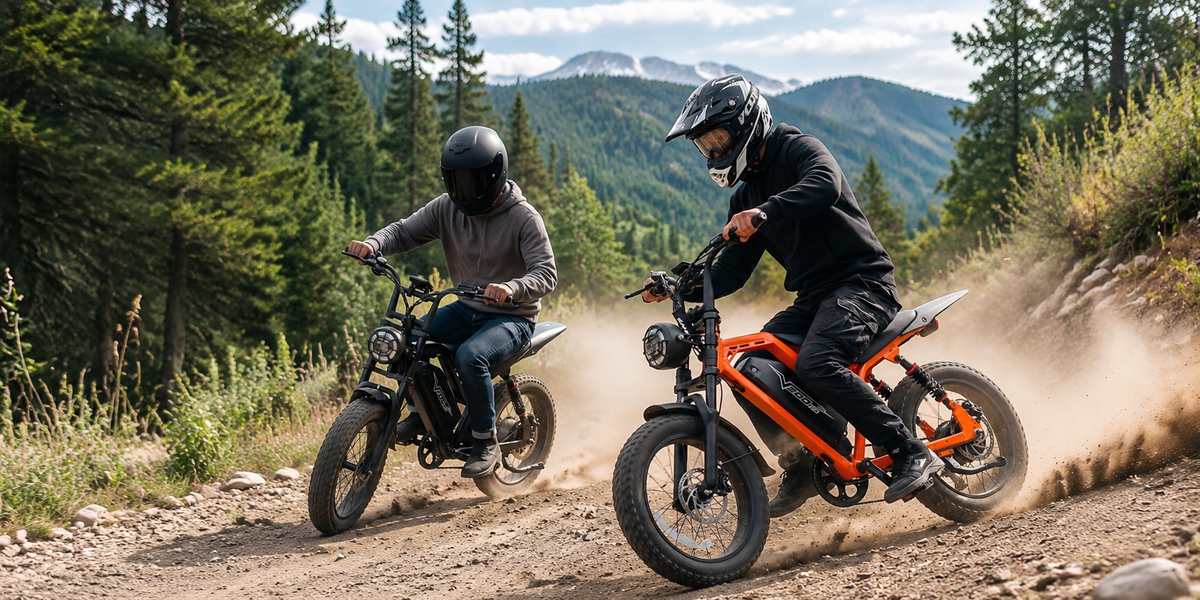
A gravel shortcut can change the feel of a ride within seconds. The smooth pavement ends, loose stones shift beneath the tires, and a shallow rut sends a noticeable jolt through the bike. On a longer outing, those repeated bumps can become more tiring than the distance itself.
The ESKUTE V200 Pro combines front and rear suspension, 125mm of front fork travel, and 20×4.0 fat tires to help riders handle changing terrain with greater comfort and control. The suspension helps manage impacts at both wheels, while the wide tires provide a stable contact point across suitable riding surfaces. Together, these features make the V200 Pro worth considering for riders who enjoy exploring beyond smooth pavement.

What Suspension Does the ESKUTE V200 Pro Have?
The V200 Pro has suspension at both wheels, helping soften the impacts riders feel through the handlebars and saddle. This is a useful distinction for anyone whose regular routes include more than occasional rough patches.
Front Suspension Fork
The front fork helps manage impacts reaching the front of the bike. On uneven ground, it allows the wheel to move with changes in the surface, reducing the abruptness of the movement passed toward the handlebars.
The V200 Pro provides 125mm of front fork travel. For riders who frequently leave smooth pavement, that travel gives the fork room to respond as the ground rises and falls. Its value is most relevant on routes where bumps arrive repeatedly, rather than as a single isolated interruption.
The fork also includes a lockout function, offering a firmer front-end feel on smooth surfaces. This makes the setup more adaptable: riders can use the appropriate setting for the paved approach and restore active suspension for the rougher route ahead.
| Riding Condition | Suspension Setup | Rider Benefit |
|---|---|---|
| Smooth roads | Lockout engaged where appropriate, following the operating instructions | Firmer front-end feel with less fork movement |
| Gravel roads | Active suspension | Helps manage repeated small bumps |
| Uneven dirt trails | Active suspension | Allows the fork to respond to changes in the ground |
Follow the supplied instructions for operating the lockout, including when adjustments should be made. Restore active suspension before entering rough terrain.
Rear Suspension
The rear shock helps soften impacts that would otherwise pass more directly through the rear of the frame toward the saddle. Its contribution becomes especially noticeable in the kind of riding that involves repeated uneven sections.
For buyers concerned about comfort throughout an outing, rear suspension deserves attention alongside the front fork. It means the V200 Pro addresses impacts at both ends of the bike, rather than relying on a suspension fork alone.
How Do the V200 Pro’s 20×4.0 Fat Tires Affect Riding Performance?
The V200 Pro’s 20×4.0 fat tires are a practical feature for riders whose routes alternate between pavement, dirt, and gravel. The four-inch-wide design provides a substantial tire profile, while the tread helps it engage with suitable off-road surfaces.
Their appeal is the flexibility to enjoy a varied recreational route without choosing a bike solely around smooth-road riding.
Tread and Tire Shape for Varied Surfaces
On firm dirt and gravel, the tire’s tread helps establish the contact needed for steering, accelerating, and slowing down. The wide tire format also provides room for the tire to deform as it meets smaller surface irregularities.
For someone planning weekend rides on country tracks and dirt paths, these are useful characteristics. The tires contribute to how the bike responds to the ground, while the suspension handles larger wheel movements.
Grip still depends on pressure, tread condition, load, and the surface. Width alone does not make one tire more secure on every kind of terrain.
Tire Pressure and Riding Feel
Tire pressure influences how much the tire deforms and how firmly it responds beneath the rider. That can change the feel of rough textures, steering, and rolling effort.
The goal is an appropriate setup for the bike, rider, and route. Follow the manufacturer’s pressure guidance rather than simply lowering pressure in search of a softer ride. Too little pressure can make handling vague and increase the risk of tire or rim damage.
Why Fat Tires Complement Full Suspension
Fat tires and suspension perform different jobs. The tires provide contact with the ground and respond to smaller irregularities; the fork and rear shock allow the wheels to move through larger changes in height.
For the V200 Pro buyer, the combination matters more than either feature in isolation. It offers a setup that considers both the texture beneath the tires and the bumps that move the whole bike. Tire grip also plays an important role when slowing down. Discover how the V200 Pro's hydraulic disc brakes support braking control across different riding conditions.
How Does the V200 Pro Perform on Different Types of Terrain?
Different surfaces create different comfort demands. A long gravel lane can feel tiring because of constant vibration, while a dirt trail may be mostly smooth until a root or depression interrupts it.
Riding on Gravel Roads
The challenge on gravel is often repetition: small stones, shallow ridges, and rough patches keep arriving even when the road looks fairly level.
The V200 Pro’s suspension is relevant here because comfort depends on managing a series of impacts throughout the ride. For riders who enjoy longer gravel stretches, the attraction is a less jarring outing, with equipment intended to soften those repeated disturbances.
Loose stones can still move beneath the tires. A measured pace and gradual steering help the rider respond without turning every patch of gravel into a sudden correction.
Riding on Dirt Trails
Dirt trails tend to change over shorter distances. A smooth section may lead into exposed roots, shallow holes, or a worn strip where the ground rises and falls.
Here, the V200 Pro’s appeal is its ability to accommodate ordinary surface changes within a recreational ride. The rider can focus on choosing a clear route through modest irregularities while the suspension helps manage the resulting impacts.
This is a different demand from steady gravel vibration: the rider needs to look ahead and respond to individual features. Deep ruts and larger obstacles still require a route choice appropriate to the bike and the rider’s experience.
Handling Potholes and Uneven Pavement
An enjoyable ride may begin with patched pavement, road joints, and uneven access lanes before reaching a trail.
The V200 Pro’s suspension has value on these everyday connecting sections too. It helps soften smaller irregularities, so comfort is not reserved for the off-road part of the outing.
For riders whose local roads are imperfect, this can be a practical buying reason even when most journeys are relatively short. Deep potholes and sharp edges should still be avoided rather than treated as suspension tests.
Riding on Grass and Mixed Surfaces
A route that moves from firm dirt to grass and back onto gravel asks the rider to adapt to changing ground contact.
The V200 Pro’s tire and suspension combination suits this kind of variety on appropriate recreational routes. The key benefit is having equipment relevant to several surfaces within one outing, rather than planning every ride around a single type of path.
Transitions deserve attention: grass can hide holes, and damp ground may offer less grip than the firm section before it. Adjusting pace as the surface changes helps keep the ride manageable. Want to understand how the V200 Pro handles uphill routes? Explore our guide to V200 Pro hill climbing performance.
How Do Suspension and Tires Work Together on the V200 Pro?
The V200 Pro combines three useful elements: suspension at both wheels, a front fork that can be set for smooth or rough sections, and fat tires suited to varied recreational surfaces.
Together, these features address a broader riding need than simply softening one bump. They give riders a setup for routes that include a paved approach, a gravel stretch, and an uneven dirt loop within the same outing.
The buying reason is clear for someone who regularly rides that mix. Front and rear suspension address impacts throughout the bike, while the tires contribute to ground contact and riding feel. The lockout adds a practical adjustment for the smoother sections between trails.
How to Get the Best Riding Experience from Your V200 Pro
A few straightforward checks help keep the ride consistent without turning every outing into a maintenance project.
-
Check tire pressure. Use a gauge and follow the recommended limits. Check both tires rather than relying on how firm they feel by hand.
-
Adjust speed before rough sections. Slow down early enough to assess the surface and make measured steering inputs.
-
Choose a clear riding line. Look beyond the front wheel. Avoid deep holes, sharp debris, and obstacles that exceed the rider’s experience.
-
Inspect the suspension. Look for visible damage, looseness, or unusual movement. Follow the maintenance instructions and have unfamiliar problems assessed before riding.
-
Maintain the tires. Check tread wear, cuts, and embedded objects. A wide tire still needs attention to remain dependable.
For routes that alternate between smooth and rough ground, remember the front fork’s lockout setting. Use it as directed, and restore suspension movement before entering uneven terrain.
Is the V200 Pro a Good Choice for Your Riding Style?
Weekend Trail Riders
The V200 Pro is a strong match for riders whose weekends include recreational dirt tracks and gravel paths. Its suspension and tire combination addresses the repeated bumps and changing surfaces that can make these outings tiring on less suitable equipment.
The reason to consider it is straightforward: enjoying the route includes feeling comfortable between the most exciting sections.
Mixed-Terrain Riders
Some outings do not stay on one surface for long. A paved approach may lead to a gravel lane, followed by a firm dirt loop.
For these riders, the V200 Pro brings together an active suspension setup for uneven sections and a front fork lockout option for smoother stretches. Its appeal lies in accommodating that variety within one recreational ride.
Comfort-Focused Riders
Riders who notice repeated jolts through the handlebars and saddle have a practical reason to consider full suspension. The V200 Pro addresses impacts at both wheels, which makes it more relevant to this need than choosing a bike on motor output alone.
Fit still matters. A comfortable reach to the controls and a suitable riding position should accompany the suspension features.
Someone who rides almost entirely on smooth, level paths may place greater value on low weight or simple transport. In that case, rough-terrain equipment may be a lower purchasing priority.
ESKUTE V200 Pro Suspension & Tires FAQs
Does the ESKUTE V200 Pro Have Front and Rear Suspension?
Yes. The V200 Pro has a front suspension fork and a rear shock absorber. The front fork offers 125mm of travel and a lockout function, giving riders a firmer option for smooth surfaces and active suspension for rougher sections.
What Size Tires Does the V200 Pro Use?
The V200 Pro uses 20×4.0 tires: a 20-inch nominal tire size with a four-inch width. This fat-tire format is paired with tread intended for varied riding surfaces.
Are 20×4.0 Fat Tires Good for Off-Road Riding?
They can be a useful choice for recreational dirt and gravel riding. Their performance depends on tread, pressure, load, and ground conditions. On the V200 Pro, they complement the front and rear suspension rather than replacing its role.
Does Full Suspension Make an Electric Bike More Comfortable?
Full suspension can reduce the harshness of impacts reaching the rider from both wheels. It is particularly useful on routes with repeated bumps. Overall comfort also depends on bike fit, tire setup, riding pace, and the surface.
Can the V200 Pro Ride on Gravel and Dirt Roads?
The V200 Pro’s suspension and tires make it worth considering for suitable gravel roads and recreational dirt paths where riding is permitted. Assess the route’s condition and difficulty; a maintained dirt track presents a different challenge from deep mud or a technical rock section.
How Should I Maintain the V200 Pro’s Tires and Suspension?
Check tire pressure, tread, and visible damage regularly. Inspect the suspension for looseness or unusual behavior, and follow the supplied maintenance guidance. Have damaged components or unfamiliar suspension problems assessed before continuing to ride.
Enjoy a More Comfortable Ride with the ESKUTE V200 Pro
Weekend rides often include more than one kind of ground. A gravel lane leads to a dirt path, and the way home may include uneven pavement. Riders who enjoy that variety have a reason to look beyond motor performance and consider how the whole bike handles the route.
Whether you're exploring gravel roads, riding local dirt trails, or navigating uneven paths, the ESKUTE V200 Pro brings together front and rear suspension, 125mm fork travel, lockout functionality, and 20×4.0 fat tires to make changing terrain more manageable.
Ready to experience a more versatile ride? Explore the ESKUTE V200 Pro and see how its suspension and tire setup fits your next adventure.


Share:
ESKUTE V200 Pro Battery & Range: How Far Can You Ride on a Single Charge?
ESKUTE V200 Pro Braking Performance: How Do Its Hydraulic Brakes Perform?