


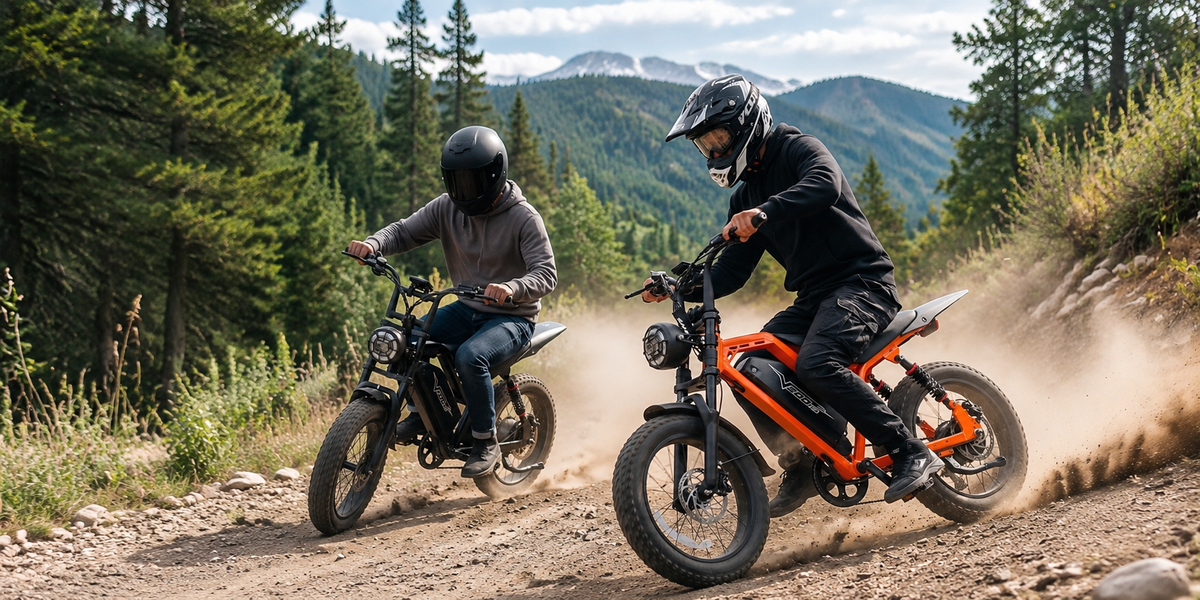
A bend appears ahead on a dirt trail. Loose gravel covers part of the entrance, and the rider needs to slow down before choosing a clear line through the corner. In moments like this, controlling speed matters just as much as building it.
The ESKUTE V200 Pro features hydraulic disc brakes designed to give riders responsive lever feedback and adjustable braking pressure. Paired with its 2000W peak motor, this configuration addresses both sides of an engaging ride: picking up pace on suitable sections and slowing down deliberately when the route changes.

What Braking System Does the ESKUTE V200 Pro Use?
The V200 Pro uses hydraulic disc brakes with front and rear braking. For riders, the important feature is how the levers allow braking effort to build progressively.
Understanding Hydraulic Disc Brakes
When a rider squeezes the brake lever, hydraulic pressure travels through a sealed hose and moves the brake pads against the disc. This allows braking force to build progressively, a characteristic known as modulation, giving riders greater control over how they slow down.
Front and Rear Braking
During braking, weight shifts toward the front wheel, which is why the front brake plays an important role in slowing the bike. The rear brake also contributes to speed control, and using both appropriately helps riders manage their pace.
Riders need to become familiar with both levers and how the bike responds. The appropriate input changes with the surface and slope; a clear, level practice area is a good place to develop that familiarity before heading onto more demanding routes.
What Makes Hydraulic Brakes Valuable on the V200 Pro?
The V200 Pro combines performance-focused electric assistance with equipment for varied recreational terrain. Its brakes deserve attention as part of that complete setup, rather than as a separate item on the specification sheet.
Responsive Braking Feel
Not every slowdown requires the same input. Approaching a narrow entrance may call for a light adjustment, while reaching a stopping point requires progressively stronger braking.
A responsive lever feel helps the rider judge that difference. This is where modulation becomes useful in everyday riding: the controls offer a way to shape the slowdown instead of treating every brake application as an abrupt stop.
For someone attracted to the V200 Pro’s motor performance, this is an equally relevant buying consideration. An enjoyable ride includes being comfortable with both acceleration and deceleration.
Hydraulic Brakes and Riding Confidence
Confidence develops partly through familiar controls. Knowing how the brake levers respond can make ordinary decisions—when to slow for a turn or approach a trail entrance—feel more manageable.
The rest of the V200 Pro also matters. Its 20×4.0 tires provide the ground contact through which braking takes effect, while front and rear suspension help the wheels respond to uneven surfaces. Tire condition, pressure, and the ground still determine the grip available. Tire condition and suspension also influence how the bike responds to changing surfaces. Explore our guide to the V200 Pro's suspension and 20×4.0 fat tires.
Together, these features give buyers a reason to assess the V200 Pro as a complete recreational riding setup. The hydraulic brakes complement its power and rough-surface equipment without making tire grip or rider judgment any less important.
How Does the V200 Pro Handle Braking in Different Riding Conditions?
Different routes ask different things of the brakes. A predictable stop on pavement is not the same task as adjusting speed over loose gravel or approaching a rough trail section.
Braking on Paved Roads
An open paved stretch gives way to a junction, where the rider plans to turn onto a quieter route. Releasing the throttle and applying the brakes progressively allows the rider to reduce speed before entering the turn.
This is where its hydraulic brakes have everyday value. The rider can begin with a light speed adjustment, then increase lever pressure as the junction approaches. Arriving at a manageable pace leaves more attention available for checking the route and steering through the turn.
For riders who enjoy the V200 Pro’s responsive acceleration, that measured transition back to a slower pace is an equally useful part of the experience.
Braking on Gravel and Loose Dirt
Loose stones can shift beneath a tire. A wheel may lose traction before the rider has used all the braking force the system can produce.
Here, modulation is more useful than a sudden hard squeeze. Reduce speed before the loose section where possible, then use measured inputs as the surface changes.
The V200 Pro’s fat tires are part of its off-road setup, but their width does not prevent skidding. Braking pressure must still match the grip available beneath them.
Braking on Uneven Trails
On a rough trail, slowing down may coincide with a shallow rut, raised edge, or worn patch of ground.
Reducing speed on the approach leaves more attention available for choosing a line. It also avoids relying on a sudden, strong brake application at the moment the bike meets the obstacle.
The V200 Pro’s suspension helps address surface impacts, while its brakes give the rider control over the approach speed. These are separate jobs that matter together on an uneven route.
Slowing Down on Downhill Sections
A descent can build speed without additional motor input. Choose a controlled speed before starting a long descent rather than relying on continuous braking throughout the slope.
Holding the brakes lightly for a long time may feel less demanding than a firm slowdown, but it still generates heat. On a sustained descent, that heat can accumulate and affect braking performance.
Plan a manageable pace and suitable stopping points. If the slope requires prolonged heavy braking just to remain in control, stop safely where possible and allow the brakes to cool rather than continuing to build heat. Do not release the brakes simply to cool them if doing so would let speed become unmanageable.
The V200 Pro’s hydraulic setup offers adjustable braking pressure, but the slope, surface, and rider’s decisions remain central to the descent.
How to Brake More Effectively on the V200 Pro
A few consistent habits help riders use the braking system effectively:
-
Slow down before a turn. Make the main speed adjustment on the approach, leaving room to steer through the corner.
-
Build pressure smoothly. Progressive input makes it easier to judge the response and adjust before a tire loses grip.
-
Respond to changing surfaces. Allow additional room on loose, wet, or debris-covered ground.
-
Leave space from other riders. Keep enough distance to respond if someone ahead slows or changes direction.
-
Ride within the visible route. Choose a pace that allows a stop within the clear distance ahead.
These habits are especially relevant when enjoying the V200 Pro’s electric assistance. As speed increases, braking decisions need to happen earlier. Responsive brakes support those decisions; they cannot replace them.
How to Maintain the V200 Pro’s Hydraulic Brakes
A little routine attention helps keep the brakes ready for the next outing. Focus on wear, visible condition, and changes in how the levers feel.
Check Brake Pad Wear
Brake pads gradually wear with use. Check them according to the fitted brake system’s instructions and replace them at the specified wear limit. Do not wait for stopping performance to decline before arranging an inspection.
Inspect Brake Rotors
Look for visible damage or contamination on the discs. Keep lubricant and oily cleaning products away from the braking surfaces. If something looks damaged or braking starts to feel different, have it checked before the next ride.
Watch for Changes in Brake Feel
The levers should feel familiar from one outing to the next. A suddenly soft lever, noticeably longer travel, or reduced braking strength calls for prompt inspection. Address the change before returning to the trail.
When Should Hydraulic Brakes Be Serviced?
Follow the maintenance instructions for the components actually fitted to the V200 Pro. When service is due or a problem appears, ESKUTE support or a qualified bike technician can help identify the appropriate next step.
Are the V200 Pro’s Hydraulic Brakes Right for Your Riding Style?
Daily Riders
Frequent stops make controlled braking a feature used throughout an ordinary trip. Riders whose permitted local routes include junctions, entrances, and changes of direction have a practical reason to value progressive lever response.
For them, the V200 Pro’s appeal includes making routine slowdowns feel deliberate and manageable.
Weekend Trail Riders
Gravel paths and dirt routes regularly change character. A wider section may narrow, or firm ground may give way to loose stones.
The V200 Pro brings hydraulic braking together with suspension and fat tires for riders who enjoy that variety. The brakes address pace changes, while the other equipment contributes to how the bike meets the ground.
Performance-Focused Recreational Riders
Riders seeking responsive electric assistance should give equal attention to the controls used to slow down.
The V200 Pro’s combination of a 2000W peak motor and hydraulic disc brakes is relevant to buyers who want both engaging acceleration and measured braking input. It is most useful when the rider has suitable places to ride and is comfortable managing the bike’s performance. Discover more about the V200 Pro's 2000W motor and acceleration performance.
Those mainly making gentle, low-speed trips may place other features higher on their shortlist. Good fit and controls they can comfortably reach should remain priorities for every buyer.
ESKUTE V200 Pro Hydraulic Brakes FAQs
Does the ESKUTE V200 Pro Have Hydraulic Disc Brakes?
Yes. The V200 Pro is equipped with hydraulic disc brakes. Fluid pressure transfers the rider’s lever input to the brakes, allowing braking effort to be applied progressively.
What Are the Benefits of Hydraulic Brakes on an Electric Bike?
Their main benefits include responsive lever feedback and modulation—the ability to adjust braking force. These qualities are useful when approaching corners, making routine stops, and changing pace on recreational routes.
Are Hydraulic Brakes Better for Off-Road Riding?
They are a useful choice for riders who value controlled braking pressure on changing terrain. However, the hydraulic label alone does not prove a shorter stopping distance than every mechanical system. Maintenance, tire grip, and riding conditions also affect the result.
How Should You Brake on Loose Gravel?
Reduce speed before reaching loose gravel where possible. Apply pressure progressively, avoid abrupt steering, and leave extra room to slow down. Sudden strong braking can exceed the traction available.
How Often Should Hydraulic Brakes Be Maintained?
Check their operation before riding and follow the service guidance for the fitted system. Riding conditions affect wear, so respond promptly to changes in lever feel, braking strength, or visible component condition.
When Should You Replace Hydraulic Brake Pads?
Replace pads when they reach the manufacturer’s specified wear limit or when damage or contamination makes replacement necessary. If their condition is uncertain, have them inspected rather than waiting for braking performance to decline.
Ride with More Confidence on the ESKUTE V200 Pro
The ESKUTE V200 Pro combines a 2000W peak motor with hydraulic disc brakes, bringing together engaging acceleration and responsive braking control. Alongside its front and rear suspension and 20×4.0 fat tires, this setup is designed for riders who enjoy exploring varied terrain and want a bike equipped for both performance and control.
Ready for your next adventure? Explore the ESKUTE V200 Pro and discover how its complete configuration fits your riding style.


Share:
ESKUTE V200 Pro Suspension & Tires: How Comfortable Is It on Rough Terrain?