


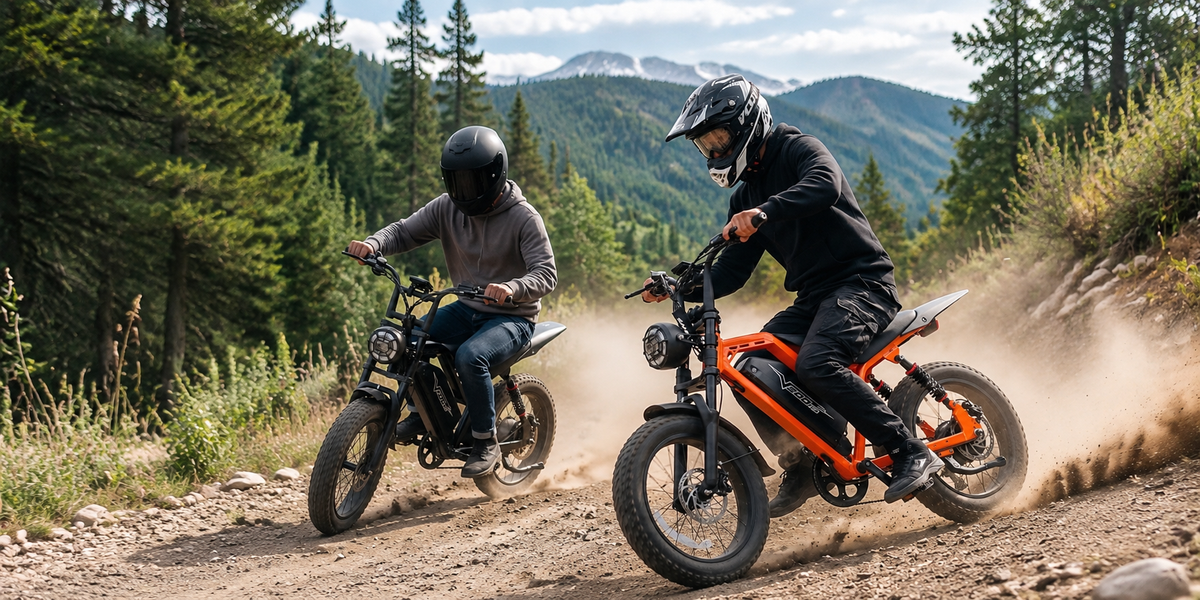
The climb home can feel different from the easy ride out. A dirt track begins to rise, gravel appears near a bend, and the rider needs to settle into a pace that works all the way uphill.
For riders who regularly meet these conditions, climbing capability is a practical reason to choose a bike. Electric assistance can reduce the effort required, while gearing, tires, and suspension influence how the ride feels as the ground changes.
With a 2000W peak motor, 99 N·m of torque, and a seven-speed drivetrain, the V200 Pro is equipped to support riders through changing gradients. Its combination of electric assistance and mechanical gearing makes it a practical option for recreational riders who regularly encounter uphill sections.

Why Hill Climbing Performance Matters
A route’s distance tells only part of the story. A short outing with several climbs can demand more effort than a longer ride on level ground.
The buying decision should therefore begin with the routes a rider expects to use. Gentle dirt rises, uphill bends, and extended gravel climbs each bring different demands. How often those features appear matters just as much as the total mileage.
For riders who regularly encounter climbs, suitable motor assistance, gearing, and traction become important parts of the choice. The V200 Pro brings these elements together in a setup designed for recreational off-road riding.
99 N·m Torque: Supporting Uphill Riding
Torque contributes to the turning force that moves the bike uphill. The V200 Pro’s 99 N·m specification is relevant when the rider needs assistance from a slow start or after losing momentum.
Imagine pausing near the bottom of a rise. Pulling away now requires more effort than starting on level ground. Farther up, a bend may require slowing again before rebuilding a comfortable rhythm.
These are the moments when pulling power becomes useful. The V200 Pro pairs its motor assistance with pedals and mechanical gears, allowing the rider to contribute as the demands increase.
The practical result still depends on the slope, total load, and available grip. Those conditions give the torque figure its context.
Climbing Hills with the 2000W Peak Motor
Rolling terrain repeatedly changes the effort required from the bike. A rider may cruise along a level section, meet a rise, and then ease off again as the trail flattens.
The V200 Pro’s 2000W peak motor provides performance potential for these more demanding uphill sections. On routes with several gradual climbs, having electric assistance available can help riders maintain a more consistent riding rhythm instead of having to rely entirely on physical effort each time the trail rises.
Rather than evaluating a bike only by how it handles one isolated hill, buyers should consider how its assistance fits the demands of an entire route with repeated changes in elevation.
For buyers, the attraction is assistance that serves the whole route, including the rises that would otherwise make an outing feel more strenuous. The motor's output is an important part of climbing performance. Take a closer look at the V200 Pro's 2000W motor and acceleration.
Different Terrain, Different Climbing Challenges
Uphill Dirt Trails
A firm dirt climb gives the rider an opportunity to establish a consistent rhythm.
The V200 Pro’s electric assistance supports forward movement, while its seven-speed drivetrain lets the rider select a comfortable pedaling effort. Choosing a suitable gear before the steeper section can make pedaling easier to sustain as the trail rises.
For riders who enjoy rolling dirt routes, this combination offers a practical benefit: the motor provides assistance while the rider can continue contributing through the pedals. It is a useful setup for those who want support without making the ride entirely dependent on the throttle.
Loose Gravel and Rocky Ground
Gravel can shift beneath the tire, making an otherwise manageable climb more demanding. Embedded rocks can also interrupt the rider’s chosen line and require changes of pace.
On these surfaces, sudden throttle input may produce wheelspin instead of useful progress. Applying power gradually gives the rider more opportunity to respond as the ground changes.
The V200 Pro's 20 × 4.0-inch fat tires provide a wide contact area that helps support traction and stability on suitable dirt and gravel surfaces. Tire pressure and ground conditions also influence the overall riding experience. However, actual grip depends on tire pressure, tread condition, and the terrain itself.
A firm section may allow a steadier rhythm, while a loose patch calls for a more measured approach. The available grip should guide how much power is applied.
Steeper Inclines
A steeper section places greater demands on both the motor and the rider. Additional body weight or carried equipment increases the effort required, while the length and surface of the climb also affect how demanding it becomes.
The V200 Pro's motor assistance and seven-speed drivetrain give riders useful options when approaching different gradients. Choosing the right gear, maintaining a steady pace, and adapting to the available traction all contribute to a more manageable climb.
Buyers who regularly face steep climbs should consider the entire hill—its gradient, surface, length, and load requirements—when assessing whether the bike suits their riding routine.
Repeated Climbs
A route with several rises asks for assistance again and again. Those sections can consume more battery energy than their distance alone suggests.
For a V200 Pro owner, the final climb matters as much as the first. Check the remaining charge before adding another loop and allow enough reserve for the return journey.
This makes familiar local rides useful preparation for longer outings. They help riders understand how their usual pace, terrain, and climbing frequency affect battery consumption and route planning. Planning longer rides with repeated climbs? Explore our guide to the V200 Pro battery and riding range.
What Else Helps the V200 Pro Handle Challenging Terrain?
The motor is only one part of the uphill experience. Other components help riders manage uneven surfaces, adjust pedaling effort, and control the bike when the route turns downhill.
| V200 Pro Feature | Practical Riding Value |
|---|---|
| Front and rear suspension | Helps manage repeated bumps and impacts on uneven uphill trails. |
| Hydraulic disc brakes | Give riders control when slowing down on descents, particularly after reaching the top of a climb. |
| 20 × 4.0-inch fat tires | Provide a wide contact area suited to varied dirt and gravel surfaces, with actual grip depending on pressure, tread, and ground conditions. |
| Seven-speed drivetrain | Helps riders adjust pedaling effort as the gradient changes, making it easier to find a suitable gear for different sections. |
The seven-speed drivetrain is especially useful to riders who want to pedal on hills. It changes the relationship between pedaling effort and wheel movement; it does not increase motor power or act as an electronic assistance mode.
Together, these components contribute to a more complete off-road riding setup. Climbing is only one part of the route, and suspension, tire setup, gearing, and braking all influence how riders manage the terrain before, during, and after an ascent.
Is the V200 Pro Suitable for Your Riding Terrain?
Who Will Appreciate It?
The V200 Pro is a strong candidate for riders who enjoy exploring permitted off-road trails with regular elevation changes. Its motor assistance, seven-speed drivetrain, and suspension make it particularly relevant to outings that combine repeated climbs and uneven ground.
For someone who wants to reduce the physical effort of uphill riding while still contributing through the pedals, this combination has a clear purpose. Electric assistance supports the climb, while the rider can select a gear that suits their preferred pedaling effort.
Riders who regularly visit outdoor riding areas and enjoy routes with changing gradients have good reasons to consider this setup.
Who May Have Different Priorities?
Someone who mainly rides slowly on smooth, level ground may place greater value on low weight, simple storage, or easy transport.
New off-road riders should become familiar with the bike’s throttle response, brakes, and low-speed handling before attempting demanding hills. Choosing a suitable riding location and getting comfortable with the bike are important parts of that decision.
V200 Pro Hill Climbing FAQs
Is the ESKUTE V200 Pro Good for Hill Climbing?
Its 2000W peak motor, 99 N·m of torque, and seven-speed drivetrain make it worth considering for hilly recreational routes. The strongest fit depends on the slope, surface, rider load, and how much pedaling the rider intends to contribute.
How Does 99 N·m of Torque Help with Uphill Riding?
Torque contributes to the turning force used to move the bike uphill. It is relevant when starting on an incline or rebuilding momentum after slowing. The V200 Pro’s torque specification should be considered alongside grip, gearing, and the demands of the route.
Does a 2000W Peak Motor Make Climbing Easier?
Electric assistance can reduce the effort the rider needs to provide on a climb. The V200 Pro’s peak-power configuration supports that purpose, while the actual response depends on the conditions. Peak output is not a guarantee of sustained performance on every ascent.
Does Rider Weight Affect Electric Dirt Bike Hill Climbing?
Yes. More total weight increases the effort needed to climb, including the rider and carried equipment. The V200 Pro’s maximum payload is 360 lbs, but remaining within that limit does not mean climbing performance will be identical for every rider.
Does Climbing Hills Reduce the V200 Pro’s Battery Range?
Climbing generally uses more energy than comparable riding on level ground. Repeated or prolonged ascents can therefore reduce the distance available from one charge. Plan for the complete route and reserve energy for any uphill sections on the return.
Final Thoughts: Is the V200 Pro Ready for Challenging Hills?
For riders who regularly encounter hills on their recreational routes, the V200 Pro offers a combination of electric assistance, mechanical gearing, and off-road equipment designed to make changing terrain more manageable.
Its strongest appeal is for riders who want extra support on uphill sections without giving up the option to pedal and stay involved in the ride.
If hills, gravel paths, and rolling trails are part of your regular riding plans, the ESKUTE V200 Pro is worth a closer look.
Explore the ESKUTE V200 Pro to discover its complete features and see whether this high-performance electric dirt bike fits your next off-road adventure.


Share:
ESKUTE V200 Pro Motor Performance: What Does a 2000W Peak Motor Bring to Your Ride?
ESKUTE V200 Pro Battery & Range: How Far Can You Ride on a Single Charge?