
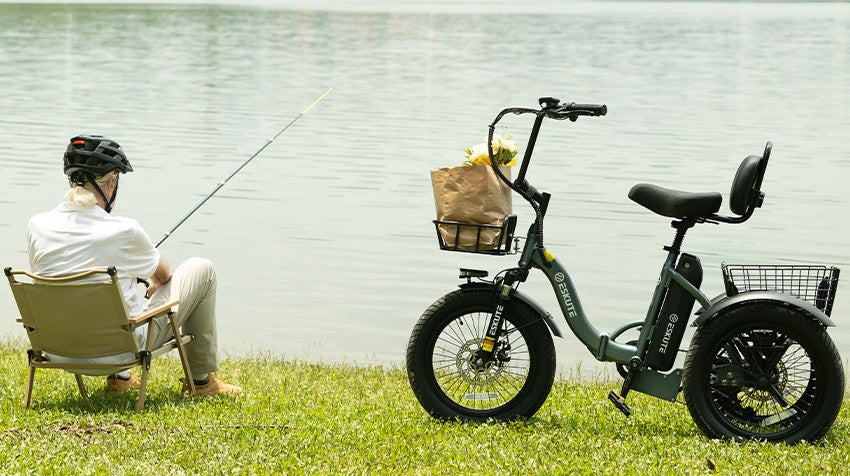
A well-loaded trike handles smooth. A poorly loaded one fights you the whole way. Whether you are heading to a lakeside dock or a coastal jetty, knowing how to pack your electric cargo tricycle makes the difference between a comfortable ride and a wobbly, frustrating one. These tips cover weight placement, gear protection, and the cargo setups that actually work.
Why Loading Technique Matters on an Electric Tricycle Bike
Before anything goes into the cargo area, it helps to know what you are working with. Electric tricycles are not cars, and they are not regular bikes. The way weight sits on the frame directly affects how the trike steers, brakes, and holds its line on uneven ground.
Most anglers assume that a trike is inherently stable and that loading order does not matter. That is partly true. Three wheels give you a more forgiving base than two. But stack all your heavy gear on one side, or pile everything in the rear without thinking, and you will notice the handling change immediately, especially on gravel paths or boat ramps.
Low Center of Gravity
The lower the weight sits, the less the trike wants to tip. Heavy items like tackle boxes, bait buckets, and coolers should sit as low as possible in the cargo area. Avoid placing them on top of lighter, compressible items.
Even Side-to-Side Balance
An uneven load pulls the front wheel off course. If you carry two coolers, split them evenly. If one side of your rear cargo area holds heavier gear, compensate on the other side with something of similar weight.
Rear-Biased but Not Rear-Overloaded
Keeping most of the weight over the rear axle area is smart. It preserves steering responsiveness. But overloading the very back can lift pressure off the front wheel, which creates a floaty, unpredictable feel at speed. Balance matters front to back as much as side to side.
How to Pack the Rear Cargo Area Without Creating a Mess
The rear cargo section is where most fishing gear ends up. Getting it organized before you leave the driveway saves time at the water and keeps everything accessible when you need it.
Start With the Heaviest Items
Put the cooler in first. It is usually the heaviest single item on a fishing trip, and it belongs at the bottom. If you are using a 48-quart cooler, models like the Eskute T300 are built with rear rack dimensions specifically designed to fit it: the top section measures 18.5 inches long by 13.8 inches wide, with 8.3 inches of height clearance.
Layer Lighter Gear on Top
Once the cooler is secured, build upward with lighter items. Tackle bags, net handles, and folded rain gear all work well in the upper space. Avoid putting fragile items directly against the cooler, since condensation can seep through soft bags over a long trip.
Keep Frequently Used Gear Accessible
Your go-to tackle, sunscreen, and snacks should sit near the top or in a front basket if your trike has one. Digging through a packed cargo area while standing on a dock is frustrating and sometimes unsafe.
Securing Your Gear So Nothing Shifts in Transit
Packing well is only half the job. Gear that slides around mid-ride creates noise, potential damage, and unexpected balance shifts. A few simple strategies keep everything locked in place.
Cargo Nets and Bungee Cords
These are the simplest tools and among the most effective. A cargo net stretched over the top of the rear rack holds irregularly shaped items like rod tubes and folded chairs without requiring you to repack every time. Bungee cords work well for securing lids, bags with handles, and anything that sits higher than the cargo walls.
Dry Bags for Wet Gear
Fish, bait, and wet lures belong in sealed dry bags or waterproof containers. This keeps the rest of your gear dry and makes cleaning the cargo area much faster after a trip. It also stops smell from spreading to everything else.
Rod Storage Options
Fishing rods are awkward to transport. Long, narrow, and easy to break, they need dedicated space. Clip-on rod holders that attach to the side of the cargo frame are a popular option. Alternatively, a PVC tube secured at a slight angle in the rear cargo area works well for multiple rods.

Comparing the Eskute T300 and T300 Pro for Fishing Loads
If you are shopping for a cargo electric tricycle designed to handle real fishing loads, two models worth a close look are the Eskute T300 and the T300 Pro. Both are folding electric trikes with step-through frames, differential steering, and low-chassis designs that resist tipping on turns.
The key differences come down to payload and battery range.
| Feature | Eskute T300 | Eskute T300 Pro |
| Max Payload | 400 lbs | 450 lbs |
| Battery | 48V 13Ah | 48V 20.8Ah |
| Estimated Range | Up to 65 miles | Up to 75 miles |
| Rear Cargo (Top) | 18.5" L x 13.8" W x 8.3" H | Larger rear cargo area |
| Cooler Compatibility | Fits 48-quart cooler | Fits more gear |
| Frame | Step-through, low center of gravity | Step-through, low center of gravity |
For most solo or duo fishing trips within a 30-to-40-mile radius, the T300 handles the load comfortably. The T300 Pro makes more sense for longer days, heavier hauls, or when you want extra range to explore further from home.
The Eskute T300 is a capable, well-priced option with a proven rear cargo setup. For anglers who want more range and a bigger hauling capacity, the Eskute T300 Pro steps up in both battery size and cargo space.
Loading Tips for Different Fishing Environments
Where you fish affects how you pack. A calm lakeside path calls for different priorities than a rocky coastal trail or a sand-heavy beach ramp.
Freshwater Lake or Pond
These are usually the most forgiving environments for a cargo tricycle electric. Paths tend to be flat and well-maintained. Focus on keeping the cooler accessible and packing careful bait storage, since freshwater trips often involve live bait that needs specific handling.
Coastal or Salt Marsh
Salt air and sand demand waterproof containers for everything. Spray gets into cargo areas, so sealed bags and rust-resistant hardware become more important. It is also worth carrying more water than you think you need, since heat and humidity drain you faster in coastal environments.
Boat Ramps and Dock Access
Steep ramps and wet surfaces change how the trike handles under load. Keep the weight lower and more centered when navigating boat ramps. The differential steering on the T300 and T300 Pro helps with tight turns, but extra care on steep inclines is always smart, especially when the cargo area is full.
What the Payload Limit Actually Means for Your Fishing Setup
Knowing the payload number is useful. Knowing what it practically fits is more useful.
A 400 lb payload on the T300 includes rider weight. A 180 lb rider leaves 220 lbs for gear. Here is a rough breakdown of a typical fishing haul:
| Item | Approximate Weight |
| 48-quart cooler (empty) | ~15 lbs |
| Ice (filling a 48-qt cooler) | ~35–40 lbs |
| Fish catch (moderate day) | ~10–20 lbs |
| Tackle bags and boxes | ~10–20 lbs |
| Rods, net, landing mat | ~8–12 lbs |
| Food, water, personal items | ~10–15 lbs |
| Total gear estimate | ~90–120 lbs |
That leaves plenty of margin on the T300 and even more on the T300 Pro with its 450 lb limit. As a general practice, staying at least 20% below the max payload keeps the ride feeling responsive and helps protect the frame and motor over time.
Pack Smart, Fish More
Loading an electric tricycle for fishing does not need to be complicated. Put heavy gear low and centered. Secure everything with nets or bungees. Keep frequently used items within easy reach. Match your cargo setup to the terrain you are actually riding.
A cargo electric tricycle handles remarkably well when packed with intention. The Eskute T300 and T300 Pro are both designed with practical fishing loads in mind, from the rear cargo dimensions to the step-through frames that make loading and unloading easier at the water's edge. Either trike turns a clunky gear-hauling situation into something genuinely pleasant.
Ready to find your fit? Check out the Eskute T300 or the Eskute T300 Pro and see which one suits your fishing style.

Frequently Asked Questions
Q1: Can You Carry a Full Cooler on an Electric Tricycle?
Yes, you can. The Eskute T300 rear cargo area is specifically sized to fit a 48-quart cooler, which covers most day fishing trips. The T300 Pro offers an even larger rear cargo space. Just account for cooler weight plus ice when calculating your total load against the payload limit.
Q2: What Is the Best Way to Keep Gear From Sliding on a Cargo Tricycle Electric?
A cargo net is the most versatile option. Stretch it over the rear cargo area after loading and it holds irregular shapes in place without requiring everything to be individually boxed or strapped. Bungee cords work well as a secondary layer for items that extend above the cargo walls.
Q3: How Far Can an Electric Tricycle Bike Travel on a Full Charge With Fishing Gear?
Range varies by load, terrain, and assist level. With a full fishing load, expect slightly reduced range compared to unloaded figures. The T300 is rated for up to 65 miles and the T300 Pro for up to 75 miles. A loaded fishing trip typically falls within those figures for most local destinations.
Q4: Is an Electric Cargo Tricycle Stable on Boat Ramps and Uneven Terrain?
Yes, generally. Both the T300 and T300 Pro feature low-chassis designs and differential steering, which support stability and clean cornering. On steep or slippery ramps, reduce speed and keep the load centered. Three-wheeled electric trikes are considerably more stable than two-wheeled bikes under load, especially when the center of gravity is kept low.
Q5: What Should You Avoid Putting in the Rear Cargo Area of a Fishing Trike?
Avoid unsecured sharp objects like exposed hooks or knife sheaths without protective covers. Keep raw bait and fish in sealed waterproof bags to prevent leaks and odors. Do not place fragile items directly against a cold, sweating cooler without a protective barrier. Also avoid piling weight high or toward one side, which can create lateral imbalance, especially on uneven terrain.


Share:
Carrying Weight on a Three-Wheel Electric Bike: Turning Techniques for Stability
Simple Daily Maintenance Tips to Keep Your Electric Trike Running Smoothly