
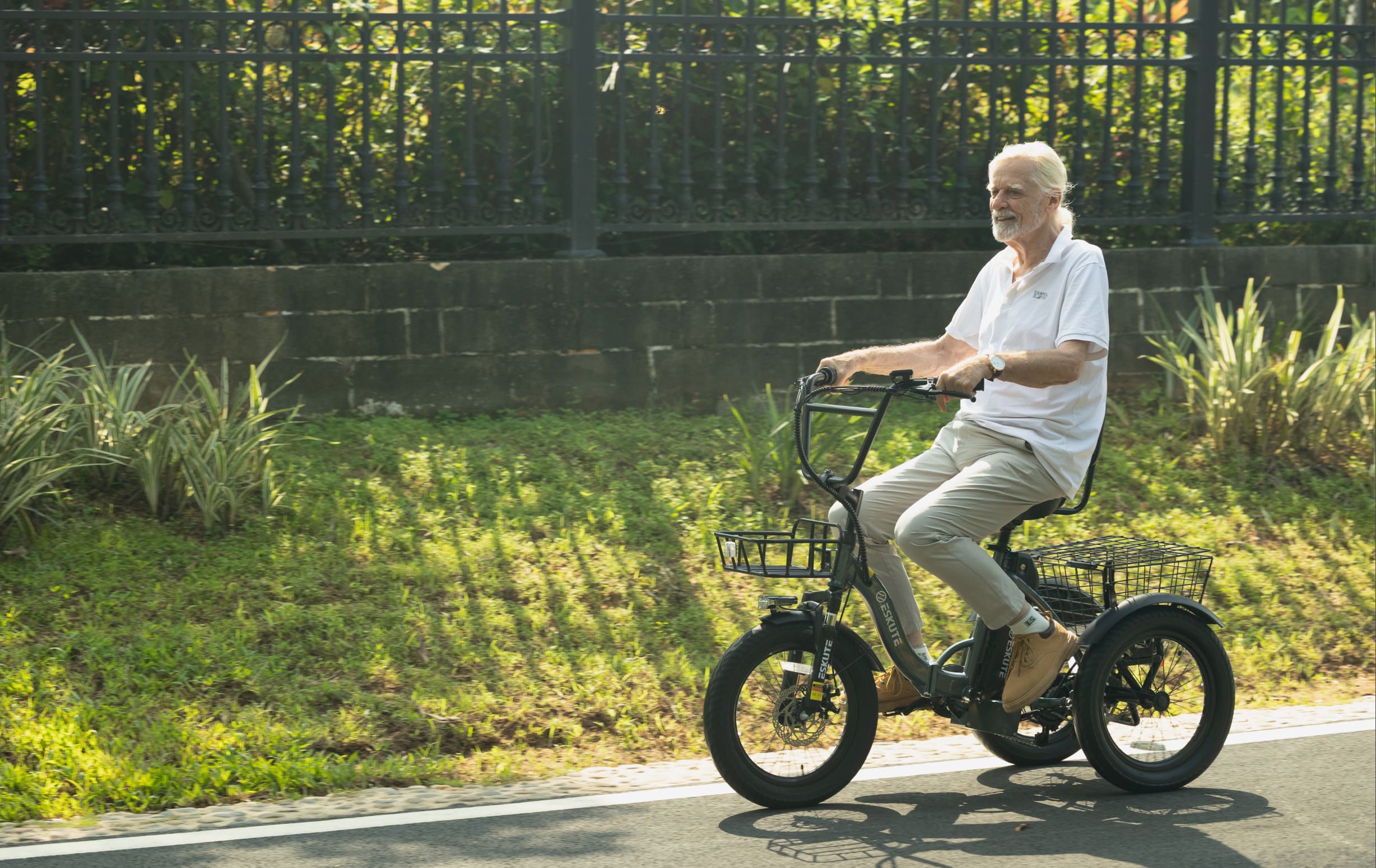
Riding a loaded three-wheel electric bike feels different from riding an empty one. The extra weight shifts how the trike handles, especially through corners. Knowing how to turn safely when carrying cargo, groceries, or a passenger makes every ride more confident and controlled. This guide covers the key techniques and design features that keep you stable on the road.
Why Weight Changes How a Three-Wheel Electric Trike Handles
Weight affects everything on a trike, and turns are where you feel it most. When you carry a heavy load, the center of gravity rises and shifts. That extra mass wants to keep moving in a straight line when you steer, which creates a tipping force on the outer wheels during a turn.
This is not a reason to avoid loading up your trike. It is a reason to ride with more awareness.
The good news is that a three-wheel electric trike has a natural stability advantage over a two-wheel bike. Three contact points on the ground create a stable triangle. But that triangle has limits, especially when the load is high or unevenly placed.
How Load Placement Affects Turning
Where you put the weight matters as much as how much weight you carry. A load placed high up, like a tall stack of bags, raises the center of gravity and makes tipping more likely in turns. A load placed low and centered keeps the trike planted.
Front-heavy loads can make steering feel sluggish. Rear-heavy loads can reduce front-wheel traction, which affects steering response. Side-heavy loads are the most problematic in turns because they already push the balance toward one side before you even start cornering.
The Role of Speed in Loaded Turns
Speed amplifies every handling issue. At low speed, a loaded trike turns predictably. As speed increases, the forces acting on the trike during a turn grow significantly. Slowing down before a corner, rather than during it, is one of the most effective habits you can build.
Turning Techniques That Keep You Stable Under Load
Good technique makes a real difference when riding a loaded trike. These are practical habits, not complicated skills.
Slow down before the turn, not inside it. Braking while turning shifts weight suddenly and can unsettle the trike. Reduce your speed on the straight approach, then let the trike roll through the corner smoothly.
Steer gradually. Sharp steering inputs at speed create sudden lateral forces. A smooth, wide arc through a corner keeps the load balanced and the wheels in contact with the ground.
Distribute weight low and centered. Before you ride, think about where your cargo sits. Use the rear cargo area for heavy items and keep them as low as possible. Avoid hanging bags off one side only.
Look through the turn. Your eyes lead your steering. Looking toward the exit of the corner helps you steer a natural, flowing line rather than reacting late.
Use both brakes gently. Brake smoothly and progressively. Sudden hard braking mid-corner can reduce traction and unsettle a loaded trike.

Design Features That Support Stability When Carrying Weight
Technique matters, but the trike itself plays a big role. Some electric trikes are built with features that actively support stability under load.
Differential Systems
A differential allows the two rear wheels to rotate at different speeds during a turn. Without one, the inner wheel and outer wheel are forced to turn at the same rate, which causes the inner wheel to scrub and skip. This creates instability, especially on a loaded trike where the forces are greater.
The Eskute T300 and T300 Pro both use a differential system. In a turn, the outer wheel covers more ground than the inner wheel, so it needs to spin faster. The differential handles this automatically, delivering smooth, continuous power to both wheels while allowing each to move at its own pace. The result is a turn that feels natural and controlled, with less risk of the trike pulling or hopping through the corner.
This is especially valuable when carrying weight. A loaded trike puts more stress on the drivetrain during turns. A differential reduces that stress and keeps the ride stable.
Low Center of Gravity
Both the T300 and T300 Pro use a step-through frame design. The frame sits lower to the ground, which brings the rider’s center of gravity down. The rear cargo area is positioned between the two rear wheels, keeping heavy loads close to the axle line rather than elevated above it.
A lower center of gravity means less tipping force in turns. The trike stays planted rather than rocking onto the outer wheels.
Load Capacity
The T300 supports up to 400 lbs, and the T300 Pro handles up to 450 lbs. These are generous limits that cover most real-world uses, from grocery runs to fishing trips to camping gear to carrying a pet. Riding within the rated capacity is important. Overloading any trike reduces its stability margin, particularly in turns.
Comparing the Eskute T300 and T300 Pro for Loaded Riding
Both trikes share the same core stability features, but there are meaningful differences worth knowing.
| Feature | Eskute T300 | Eskute T300 Pro |
| Max Load Capacity | 400 lbs | 450 lbs |
| Battery | 48V 13Ah | 48V 20.8Ah |
| Range | Up to 65 miles | Up to 75 miles |
| Differential | Yes | Yes |
| Step-Through Frame | Yes | Yes |
| Parking System | Yes | Yes |
The T300 Pro’s larger battery makes it a better fit for longer loaded rides, where range matters more. The T300 is a solid choice for shorter trips and everyday errands. Both are designed for comfort, with wide seats and a supportive backrest.
The parking system on both models is worth mentioning specifically. On a slope, a loaded trike can roll if there is no way to lock it in place. A built-in parking brake helps reduce the chance of rolling when stopping on uneven ground.
Practical Tips for Common Loaded Riding Scenarios
Different situations call for slightly different approaches.
Grocery shopping: Pack heavier items at the bottom of the cargo area. Keep the load centered between the two rear wheels. Avoid hanging bags from the handlebars, which raises the center of gravity and affects steering.
Fishing or camping: Gear tends to be bulky and unevenly shaped. Secure everything before riding. Loose items that shift during a turn can throw off the balance unexpectedly.
Riding with a pet: Pets move, which means the load shifts. Keep speeds moderate and take corners wider and slower than usual.
Hilly terrain: Descending a hill with a full load requires extra braking distance. Start slowing earlier than you think you need to, and avoid turning on steep downhill sections if possible.
Ride Loaded, Ride Confident
A three-wheel electric trike is one of the most stable electric trikes available for everyday hauling. With the right technique and a well-designed trike, carrying weight does not have to mean compromising safety. Slow your approach, steer smoothly, load low, and let the trike’s design do its job. Explore the Eskute T300 and Eskute T300 Pro to find the right fit for your rides.

FAQs
Q1: Is a Three-Wheel Electric Trike Safe to Ride With Heavy Loads?
Yes, a three-wheel electric trike can be ridden safely with heavy loads when the weight is distributed correctly and speed is managed through turns. The three-point contact gives it a stability advantage over two-wheel bikes. Staying within the rated load capacity and keeping cargo low and centered reduces the risk significantly.
Q2: How Should I Turn a Loaded 3 Wheeler Electric Trike Without Tipping?
Slow down before the turn, not during it. Steer with a smooth, gradual input rather than a sharp flick. The wider the arc, the more stable the turn. Avoid braking mid-corner, and make sure your load is secured and centered before you set off.
Q3: Does a Differential Make a Difference on an Electric Mobility Trike?
Yes, a differential makes a meaningful difference, especially under load. Without one, the rear wheels are forced to rotate at the same speed in a turn, which causes scrubbing and instability. A differential lets each wheel turn at its own speed, keeping the trike smooth and planted through corners.
Q4: How Far Can a Loaded Electric Trike Travel on One Charge?
Range depends on the battery size, total weight, terrain, and assist level. The Eskute T300 offers up to 65 miles on a 48V 13Ah battery, while the T300 Pro reaches up to 75 miles with its 48V 20.8Ah battery. Carrying a heavier load will reduce range somewhat, so planning for shorter distances than the maximum is a reasonable approach on fully loaded rides.


Share:
Best Electric Bikes for Women and Men: What to Look for Before You Buy
How to Load an Electric Tricycle for Fishing Trips Without Mess or Wobble