
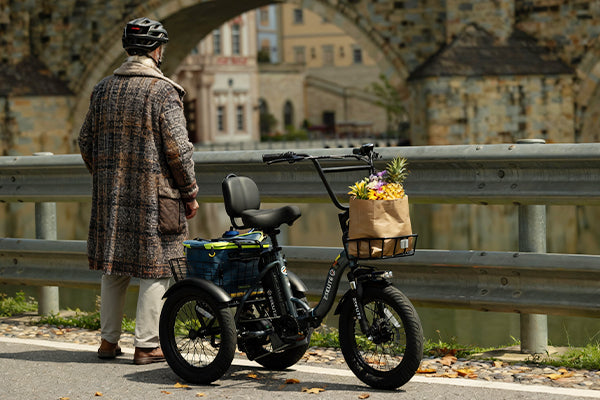
Shopping for groceries shouldn't mean asking your kids for rides or struggling with a regular bike. Electric cargo tricycles give you back that independence. Before you buy, nail down three things: a frame you can step through easily, a trike that’s rated for real-world hills and extra weight, and front-and-rear disc brakes that actually stop you when loaded. Let's break down what separates a smart purchase from an expensive garage ornament.
Why Do Seniors Choose Electric Cargo Tricycles Over Regular Bikes?
Regular bikes demand balance. Electric cargo tricycles don't. That's the core difference, and it changes everything about riding after 60.
No Balance Required: Three-Wheel Stability
Two wheels force you to constantly adjust your center of gravity. Stop at a light? You're either putting a foot down or wobbling. Three wheels sit flat. You stop, you're stable. No catching yourself, no tipping over while fumbling for your phone. The rear two wheels create a stable platform that stays put whether you're moving or parked.
Built-In Cargo Space for Daily Errands
That wire basket bolted to a regular bike? It holds maybe two bags before everything tips. Electric cargo tricycles come with actual cargo capacity, rear baskets that hold meaningful load ratings, or front platforms that can handle your week's groceries.
Electric Assist Reduces Physical Strain
Pedaling uphill with groceries at 25 used to be manageable. At 65 or 70? That's a different story.
The electric motor does the heavy lifting, literally. You can pedal if you want the exercise, or twist the throttle and let the motor handle it. Either way, you're not arriving home exhausted and sore.
Step-Through Frame for Easy Mounting
Swinging your leg over a high bar gets harder with bad knees or hip replacements. Step-through frames drop that center bar way down: sometimes to a low step-through height on step-thru designs. You walk up to it, step through, and sit down. Done. No gymnastics required, no pulling muscles trying to mount.
What Makes the Most Stable Electric Trike for Senior Riders?
Stability isn't just about having three wheels. Design details determine whether you feel confident or constantly nervous.
Rear vs. Front Cargo Wheel Design
Two wheels in back (delta design) beats two wheels in front for cargo hauling.
- The rear track width spreads closer to the mid-20-inch range on some senior trikes (for example, Eskute T300 Pro lists a 26-inch rear width), creating a low center of gravity that resists tipping. Load up the rear basket, and the weight sits right between those back wheels.
- Front cargo designs put weight ahead of the steering, making turns feel weird and increasing tip risk when the basket's full.
- A rear differential matters here, too. With cargo on board, turns put more stress on the rear wheels; a differential lets the left and right rear wheels rotate at different speeds instead of dragging the inside wheel. That smoother cornering reduces sudden steering “push,” helps the trike tracks more predictably, and can lower the chance of a wheel lifting when you turn with a loaded basket.
- The rear cargo area is also where a delta trike really earns its keep. On trikes like the Eskute T300 and T300 Pro, the rear area is built to carry bulky loads, so it’s spacious enough for real-life hauling—and that same “big, flat rear space” can work for bringing along a secured pet carrier when set up safely.

Wider Wheelbase and Lower Center of Gravity
Physics is simple here: wider is more stable. Look for a rear track width that feels planted (mid-20-inch range on some utility trikes). Pair that with a step-through you can mount easily and a saddle height you can manage comfortably (minimum seat height varies by model), and you've got a trike that plants itself firmly. Very narrow rear widths can still tip on sharp turns or uneven ground.
Weight Distribution When Loaded
Empty, any trike feels stable. The test comes with 40 lbs of groceries.
- Rear cargo trikes keep weight low and centered between the back wheels. This distribution prevents the front wheel from lifting on steep climbs and keeps you grounded during turns.
- Front baskets shift weight forward, which can make the rear end feel light and twitchy.
Low-Speed Handling and Turn Radius
Parking lots and sidewalks mean slow speeds and tight turns. The best electric tricycles for seniors handle these without drama. Look for models with a tight, predictable turning feel at walking speed; you should be able to U-turn in a standard driveway. At walking speed (2-3 mph), the trike should track straight without wobbling or demanding constant steering corrections.
Which Power and Battery Features Matter in Electric Tricycles for Seniors?
Motors and batteries determine whether your trike conquers hills or leaves you pedaling hard halfway up.
Motor Power: Why Peak Ratings Matter on Hills
A lower-powered setup can feel fine on flat roads, but hills plus cargo are where you notice the limits. If your area has any real hills, don't cheap out here. Some trikes aimed at stability and hauling list peak motor output around 1200W.
Battery Range for Neighborhood Trips
Most seniors aren't doing 30-mile rides. You need enough range for grocery runs, library trips, maybe coffee with friends, call it 8-12 miles round trip.
A 48V battery around 10.4Ah can be advertised up to ~55 miles, while larger packs (like 48V 20.8Ah) may be advertised up to ~80 miles. Range still varies a lot by rider weight, terrain, speed, and assist level. That's plenty.
If your goal is long-distance travel across town, a car is usually the more practical tool. For neighborhood trips, a realistic e-trike range is what matters.
Pedal Assist vs. Throttle Control
Pedal assist gives power as you pedal, twist the dial for more or less help. The throttle is like a motorcycle; twist the grip and go, no pedaling needed. For seniors, having both options matters. Use the pedal assist for exercise and battery life. Use the throttle when your knees hurt or you're just tired. Many utility trikes in the U.S. are sold as Class 2 (pedal assist + throttle), which fits this use case well.
Charging Convenience and Battery Life
You want a removable battery. Carry it inside, plug it into a regular outlet, and done. Batteries hardwired into the frame mean dragging an extension cord to the garage or wheeling a heavy trike to your outlet. Charging takes about 4–6 hours on many models. Batteries last several years with normal use, and replacement cost depends heavily on voltage/capacity and the brand’s parts pricing.
What Cargo Capacity Do You Actually Need in an Electric Cargo Tricycle?
Cargo capacity sounds great until you realize you're hauling 30 lbs max. Match capacity to your real needs.
Grocery Shopping: Basket Size
Three to four grocery bags from a typical store run weigh about 40-60 lbs total.
- A rear basket measuring around 18–19" long and ~14" wide (with an ~8" basket wall height on some rear racks) holds this comfortably.
- Bigger baskets (24" x 20") handle bulk items like paper towels or a bag of dog food.
- Smaller baskets (16" x 12") work if you shop light, but you'll max them out fast with a week's worth of food.
Weight Limits: Rider Plus Cargo
Most electric cargo tricycles support around 400 lbs total weight, with some higher-capacity options rated up to about 450 lbs (for example, Eskute lists the T300 at 400 lbs and the T300 Pro at 450 lbs). Weigh yourself, then subtract that from the limit: what's left is your cargo capacity. A 180-lb rider on a 350-lb-capacity trike has 170 lbs for cargo. Sounds like plenty until you consider the basket itself weighs 10-15 lbs. You're really working with 155-160 lbs of usable cargo space. Always check both the total weight capacity and the basket weight limit separately.

Rear Rack vs. Front Basket
Rear baskets sit low and wide between the back wheels, stable and out of the way. You can't see your cargo while riding, but it doesn't block your view forward. That rear space is also where many riders place a secured pet carrier, so a small dog or cat can come along without crowding the handlebars area.
Front baskets let you watch your stuff, but can obstruct vision if too tall. They also affect steering feel.
For groceries and packages, rear baskets win. For carrying a purse or small items you want visible, front baskets make sense.
Securing Items During Rides
Bungee cords and cargo nets are your friends. Baskets without attachment points are useless for anything that might shift. Look for integrated tie-down hooks or rails. Milk and eggs don't care, but a bag that tips over and spills oranges across the street is a problem. Some trikes include cargo nets or covers: nice touch, but you can add your own for $15-30.
FAQ
Q1. Will My Electric Cargo Tricycle Fit in a Standard Garage?
Most electric cargo tricycles measure roughly 57 inches long and ~24 inches wide on compact folding trikes, while larger cargo-style trikes can be around 72 inches long and ~26 inches wide, about the footprint of a small motorcycle. A standard single-car garage (12 feet wide) fits one easily, with room to walk around it. Measure your actual space first, especially the doorway width. Some garages have 32-inch side doors that won't clear a 38-inch-wide trike. If garage space is tight, look for models with folding rear sections, though these are rare in cargo trikes. Many seniors store them in sheds, under carports, or along the side of the house with a weatherproof cover.
Q2. Can I Ride an Electric Tricycle for Seniors in the Rain?
Yes, but with precautions. The electrical components (motor, battery, controller) have weather-resistant housings rated for light rain and splashing. You’ll often see ratings like IP54 for the bike and higher ratings listed for the battery itself. As an example, the ESKUTE T300 Pro lists an IP level of IP × 54 and also highlights front-and-rear disc brakes, which is the kind of spec combo you want when you might get caught in light rain. Don't submerge them or pressure-wash the trike. Riding in steady rain is fine, just dry everything afterward and store the battery indoors.
Q3. Do Electric Cargo Tricycles Work for People With Limited Hand Strength?
Many do, with the right features. Twist-grip throttles require less strength than thumb throttles: you're rotating your wrist, not pressing with your thumb. Disc brakes generally need less hand force than rim brakes, and some setups feel especially light at the lever. Look for models with ergonomic grips (larger diameter, soft rubber) that reduce strain. For example, the ESKUTE T300 Pro’s Butterfly Handlebar is designed with seniors in mind—its ergonomic shape supports more natural hand positions, reduces pressure on the wrists, and can help relieve fatigue on longer rides. Some trikes offer electronic shifters that require just a button press instead of manual lever shifting. If arthritis is a concern, test the controls in person; what feels easy varies by individual. Avoid models with stiff brake levers or tiny throttle controls.
Conclusion: Reclaiming Independence with the Right Trike
Start with rear-wheel stability, add a hill-capable motor setup, and don't settle for weak brakes. Test ride before buying, if possible, comfort and control vary more than specs suggest. Your best electric tricycles for adults should feel natural within the first five minutes, not after weeks of "getting used to it."


Share:
Price vs Safety: What Matters More When Choosing an Electric Trike for Seniors?
Moped-Style E-Bike Trends in 2026: Faster, Smoother, Easier to Ride?