
Looking for great places to ride your electric tricycle with friends? The best routes combine smooth, flat paths with scenic views and convenient amenities. This guide covers what makes routes suitable for electric tricycles for adults, the best urban locations, scenic outdoor paths, and how to discover new routes in your area.
What Makes a Good Route for Electric Tricycles for Adults?
Not every path works well for electric tricycles. You need specific features that make riding safe, comfortable, and enjoyable for everyone in your group.
Smooth, Paved Surface Requirements
Electric tricycles for adults perform best on solid, even pavement. Asphalt or concrete paths give you stable traction and predictable handling. Loose gravel can feel rougher and may reduce efficiency—wide tires and a three-wheel stance can help with stability. Cracked pavement catches wheels and makes steering harder.
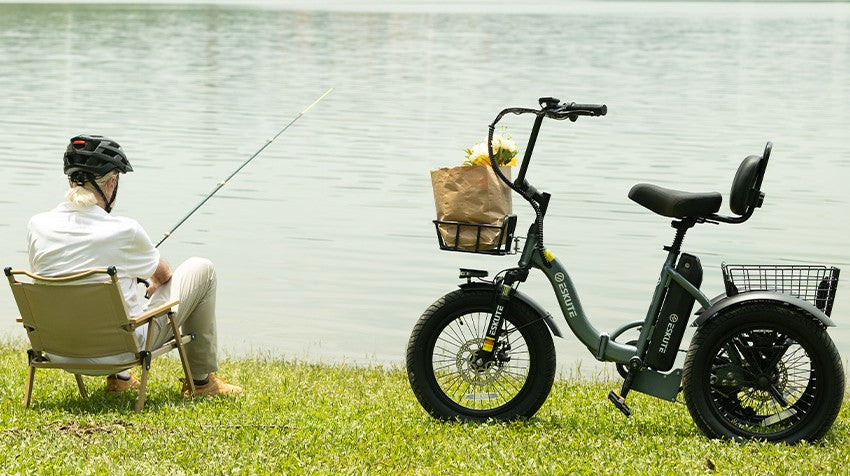
If your "ride-with-friends" outings often include picnic items, jackets, cameras, or extra gear, built-in cargo capacity makes things easier. For example, the Eskute T300/T300Pro both include a spacious front basket and large rear cargo area, so you can bring essentials without overloading a backpack. The T300 supports up to 400 lbs, and its rear cargo compartment fits 48qt coolers. The T300Pro supports up to 450 lbs and features a larger rear cargo area with more storage capacity. Both also feature a wide seat with a backrest and front suspension; the T300Pro adds a suspension seatpost and butterfly handlebars for extra comfort on longer rides.
Safe Width for Group Riding
Width matters when you're riding together. A single electric tricycles for adults needs about 3 feet of clear space. When you're riding side by side to chat, you need 6 to 7 feet minimum. Shared-use trails are often around 10 to 14 feet wide (12 feet is common). That's enough room for your group to ride two abreast with space for others to pass safely. NHTSA recommends proper spacing for safe group riding.
Minimal Traffic and Protected Access
Heavy car traffic ruins the experience and creates real danger. Your electric tricycles for adults can't accelerate or maneuver like regular bikes when vehicles pass close by. The best routes either ban cars completely or separate bike lanes with physical barriers like curbs or bollards. Choose paths through parks, along waterfronts, or on converted rail corridors where cars never go.
If your route includes hills, dusk riding, or low-visibility sections, safety features on the trike matter too. For example, both the Eskute T300/T300Pro include a differential for smoother turning, a parking brake to prevent roll-back on slopes, front and rear disc brakes for fast, precise response in different weather, plus a headlight and brake light to improve visibility at night or in poor conditions.
Rest Stops with Charging and Refreshments
Plan breaks around comfort and group pacing (restrooms, water, shade, and an easy regroup spot), not because you "must" recharge every few miles—many adult electric tricycles can cover substantial distance on a full charge, and top-ups are usually optional unless you’re doing a longer ride or carrying heavier loads.
For planning, range is closely tied to battery capacity. For example, the T300 upgraded its battery from 48V 10.4Ah to 48V 13Ah, increasing range to 55 miles; the T300Pro uses a 48V 20.8Ah battery with up to 80 miles of range. That makes it easier to plan relaxed 10–20 mile group rides without treating "finding an outlet" as a hard requirement, just use rest stops for hydration and regrouping. For longer rides, comfort matters just as much as range, and both the T300 and T300Pro come with a wide, cushioned seat with a supportive backrest; the T300Pro also upgrades to a suspension seatpost to make extended cruising feel easier and less tiring.

Where Are the Best Urban Routes for Electric Tricycle Adults?
Cities offer surprisingly good riding once you know where to look. Urban routes give you variety, amenities, and usually better maintenance than rural trails.
Waterfront and Riverwalk Paths
Rivers running through cities almost always have paved paths alongside them. These riverwalks stay flat because they follow the water level, making them perfect for electric tricycles for adults. You get continuous pavement for miles without crossing streets or dealing with traffic lights.
Cities like San Antonio, Chicago, and Portland have invested heavily in riverside infrastructure. Most riverwalks ban cars entirely and provide plenty of width for group riding. You'll often find restrooms and water access at regular intervals, but spacing varies by city.
City Park Loop Systems
Large urban parks often contain loop roads originally built for cars but now restricted to bikes and pedestrians. These loops give you predictable distances, smooth surfaces, and zero cross traffic. New York's Central Park loop is about six miles, and its Park Drives create a car-free corridor. San Francisco's Golden Gate Park offers similar circuits.
Loop routes work great for groups with mixed abilities. Faster riders can do extra laps while others take breaks. Everyone ends up back at the same parking area without complex navigation.
Converted Rail Trail Networks
Old railroad corridors make outstanding electric tricycle adult routes. Rail companies built tracks with minimal grades because trains can't climb steep hills. When cities convert abandoned lines into trails, you inherit those gentle slopes and straight paths. Rail trails often have gentler grades, which feel almost flat on your electric tricycle for adults.
Major rail trail systems like Atlanta's BeltLine or Indianapolis's Monon Trail connect multiple neighborhoods across 10 to 20 miles. These networks give you options for different ride lengths on the same visit.
Protected Downtown Bike Corridors
Some progressive cities have built protected bike lanes right through their downtown cores. These lanes use concrete barriers or parked cars to separate bikes from traffic. You can ride from one end of downtown to the other without sharing space with buses or taxis.
Protected lanes work surprisingly well for electric tricycles for adults despite the urban setting. You get frequent access to cafes, shops, and public restrooms. Cities like Minneapolis, Washington DC, and Seattle have invested in connected corridor networks.
Which Scenic Routes Work Best for Electric Tricycles for Adults?
When you want natural beauty instead of urban scenery, these route types deliver memorable rides without technical difficulty.
Lakeside and Reservoir Perimeter Paths
Lakes and reservoirs offer loop routes with built-in distance markers and constant water views. The paths circle the shoreline, giving you natural turnaround points and easy navigation. Many reservoir paths exist because water management districts built access roads for maintenance vehicles.
The terrain stays flat since the path follows the water level. Plan for 8 to 15 mile loops at most reservoirs.
Coastal Boardwalks and Beach Access Routes
Oceanfront boardwalks combine great scenery with perfect pavement. These wooden or concrete paths run parallel to beaches, staying flat and smooth for miles. Virginia Beach, Ocean City, and Santa Monica offer boardwalks long enough for serious rides. You'll share space with walkers and runners, so early morning rides work best for speed.
Beach access routes work year-round in warm climates. Your electric tricycles for adults handle the occasional sand drift better than regular bikes because the three-wheel design stays stable.
Botanical Garden and Arboretum Trails
Gardens and arboretums maintain internal path networks designed for leisurely exploration. Most garden trails run 2 to 5 miles total, making them ideal for shorter group rides. The controlled environment means reliable conditions year-round. Gardens irrigate paths and clear debris daily. This predictability works well for groups, including less experienced electric tricycle adult riders.
Historic Neighborhood and Landmark Tours
Create your own routes by connecting historic sites through quiet streets. Many cities have designated heritage areas with wide streets, minimal traffic, and interesting architecture. Historic districts often restrict through traffic, making them safer for electric tricycles for adults than regular neighborhoods.
Check local tourism websites for self-guided tour maps. These usually mark safe parking, public restrooms, and cafes along the route. Converting walking tours into electric tricycle adult rides just requires adjusting the distances between stops.

How to Find New Routes for Electric Tricycles for Adults?
Discovering good routes takes some research, but several resources make the process easier.
Using Trail-Finding Apps and Cycling Maps
Apps like TrailLink, AllTrails, and Ride with GPS let you filter by surface type, difficulty, and length. Search for paved trails rated easy or beginner-friendly. Read recent reviews to check current conditions since trail quality changes over time. Most apps show elevation profiles. Look for routes with minimal elevation gain, ideally under 100 feet per 10 miles.
Checking Local Parks and Recreation Departments
City and county parks departments maintain official trail maps on their websites. These maps show surface types, distances, and access points. Call the parks office if online information seems outdated. Staff can tell you about recent improvements or current conditions.
Joining Electric Tricycles for Adults Riding Groups
Local riding clubs know the best routes because they've tested everything in the area. Join Facebook groups or Meetup communities focused on electric trikes. Members share route recommendations, organize group rides, and warn about problem areas. Some bike shops sponsor social rides and maintain route libraries.
Scouting Routes Before Group Rides
Always preview new routes before bringing your whole group. Ride the path alone or with one other person to check surface quality, identify rest stops, and time the distance. During your scout ride, mark good turnaround points for groups wanting shorter distances. Use your phone to photograph key turns or confusing intersections.
FAQs
Q1. How Do Weather Conditions Affect Route Choices for Electric Tricycles for Adults?
Weather significantly impacts route selection and safety. Rain can make painted markings and metal plates slippery and reduce visibility, so protected paths (or rescheduling) are safer during heavy precipitation. Hot weather can drain batteries faster and increase rider fatigue, making shaded routes and extra water more important. Strong winds—especially gusty sidewinds—can affect handling on any trike, so lower your speed and choose routes with fewer exposed stretches. Cold temperatures can noticeably reduce battery range, so plan shorter loops and keep your battery stored/charged in a moderate environment when possible. Always check forecasts before rides and have alternate plans ready. The National Weather Service highlights heat safety during outdoor activities.
Q2. What Legal Restrictions Apply to Electric Tricycles for Adults on Different Trail Types?
Trail regulations vary by location and managing agency. Many multi-use paths allow certain e-bike classes (often Class 1/2) and enforce posted speed limits, but definitions vary by region—and some products list "peak" power differently than "nominal/continuous" ratings—so it’s best to verify the specific trail rules and local regulations before you ride. Some trails ban all motorized vehicles, including electric tricycles. State parks often have different regulations from city parks. Sidewalk riding laws differ by municipality. National parks often allow e-bikes where traditional bicycles are allowed, but rules vary by park—always check the specific park’s current regulations. Always check the specific trail website for current regulations and respect posted speed limits. The National Park Service provides specific e-bike guidelines.
Q3. How Do You Transport Electric Tricycles for Adults to Distant Trailheads?
Transporting trikes requires planning since they don't fit standard bike racks. A heavy-duty hitch-mounted cargo carrier, a small utility trailer, or a van/pickup setup is often the most practical approach for adult electric tricycles. Some riders remove the front wheel to reduce the width. Foldable models can save a lot of space in storage and transport, but trikes can still be heavy—using a ramp, loading assist, or a two-person lift can make a big difference. For non-folding models, consider renting a trailer for group trips. Secure the trike firmly and protect key components (including the battery) during transport to reduce the risk of damage.
Conclusion: Start Your Next Group Ride Adventure
Start exploring routes for your electric tricycles for adults this week. Use trail apps to find paved paths near you, scout them in advance, and invite friends for your first group ride. The right route makes every outing enjoyable. If you’re choosing a foldable electric trike for stable, longer, "bring-everything" rides with friends, add Eskute’s T300 and T300Pro to your shortlist.


Share:
Is a Moped-Style E-Bike Good for a Child? Age Guidelines and Safety Checklist
Fat Tires vs. Bigger Wheels on Moped-Style E-Bikes: Which Should You Choose?