
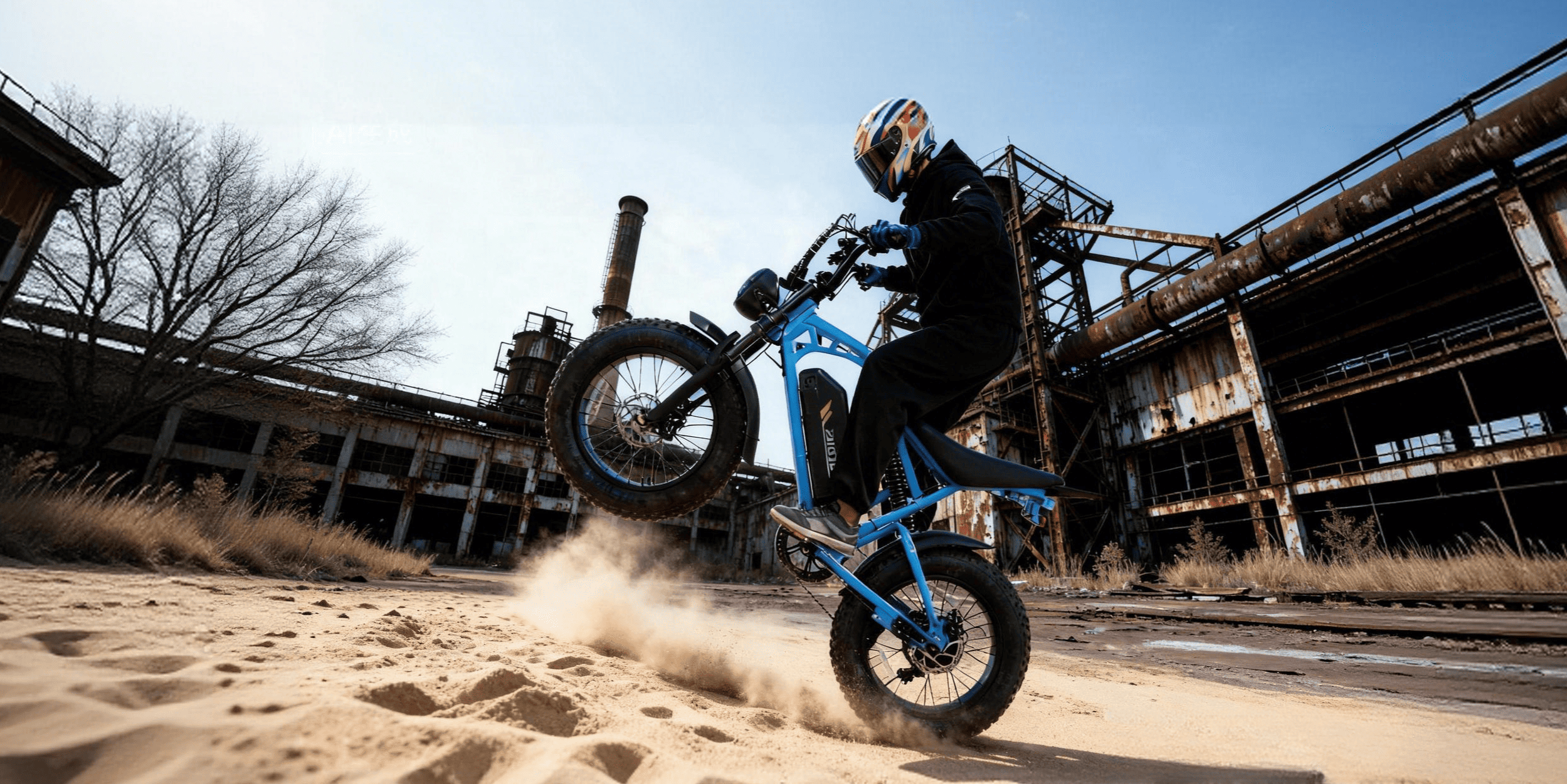
Fat tires (often 4+ inches wide on smaller wheel sizes like 16–20 inches) excel at off-road stability and comfort, while bigger wheels (26-29 inches with standard width) provide better speed and efficiency on pavement. Your choice between a big tire electric bike and a big wheel electric bike depends on whether you prioritize trail capability or road performance.
What's the Difference Between Big Tire Electric Bikes and Big Wheel Electric Bikes?
The terminology can get confusing, but understanding the core differences helps you make the right choice for your riding style.
Tire Width vs. Wheel Diameter Basics
- Big tire electric bikes use wide tires (often around 4 inches, with exact width varying by model) mounted on smaller wheel diameters (commonly 16–20 inches). Big wheel electric bikes use standard-width tires (often around 2–2.5 inches, depending on the bike) on larger diameter wheels, usually 26 to 29 inches.
- The width gives fat tires their signature look and performance characteristics. That extra rubber creates a larger contact patch with the ground, which directly affects traction and stability. Bigger wheels use their diameter advantage to roll over obstacles more easily and maintain higher speeds with less effort.
For example, Eskute’s V100 uses 16×4.0 fat tires, and the V200 uses 20×4.0 fat tires—both are all-terrain tires designed for strong grip and less slipping, and they can handle city roads, gravel, beach sand, and muddy paths without feeling "out of place."
Traction and Contact Patch Characteristics
- Electric bike fat tires put more rubber on the ground at any given moment. This larger contact area means better grip on loose surfaces like sand, snow, and gravel. When you're riding through soft terrain, that wide footprint prevents sinking and keeps you moving forward.
- Big wheel electric bikes have a smaller contact patch but use their wheel diameter to maintain momentum. The larger circumference means each rotation covers more ground, which helps on hard surfaces where traction isn't the limiting factor.
Speed and Rolling Resistance Comparison
- Fat tires create more rolling resistance because more rubber touches the ground. That usually means you’ll need more energy to hold the same speed on pavement, and range can be lower—especially at higher speeds.
- Big wheel electric bikes roll more efficiently on smooth surfaces. With similar motor limits and gearing, big wheel setups often feel "faster for the same effort," but high-power fat-tire moped-style models can still be tuned for 28 mph+ territory.
Weight and Range Impact
Fat tires themselves weigh more, often noticeably more than standard-width tires (exact weight varies by brand, casing, and puncture protection). Many fat-tire moped-style e-bikes also come in heavier overall builds than comparable big-wheel commuters, and that extra mass can reduce range when you ride primarily on pavement. It’s also common to see some range reduction on fat tire models when ridden on pavement under similar conditions. The Department of Energy provides further insights on how e-bikes serve as a low-cost pathway to reduce energy consumption.

How Do Electric Bike Fat Tires Perform Off-Road Compared to Bigger Wheels?
This is where fat tires really shine and why they dominate the best off-road electric bikes category.
Different Terrain Handling Abilities
Fat tires float over soft terrain where big wheels dig in and bog down. On sand, the difference is often dramatic. A big tire electric bike can maintain forward momentum across beach sand or desert trails that might stop a big wheel model in softer conditions.
Fat tires with low pressure (often in the single digits to low teens PSI, depending on the tire and rider weight) spread your weight across a wide area.
Rocky trails present a different challenge. Fat tires absorb impacts that would rattle your bones on narrower tires. The air volume in a 4-inch tire running at low pressure acts like built-in suspension. Big wheel electric bikes need more sophisticated suspension systems to match this natural compliance.
Loose Surface Stability
Stability on loose surfaces comes down to how the tire interacts with the terrain. Electric bike fat tires create a stable platform by distributing weight over a larger area. When you hit a patch of loose gravel on a descent, the fat tire plows through rather than skittering sideways.
Big wheel electric bikes sacrifice some of this stability for agility. The narrower tire cuts into loose material rather than floating over it, which can lead to unpredictable handling when traction suddenly changes.
A wider fat-tire footprint also adds stability in a more practical way: the extra contact area creates stronger lateral support and better wet-surface grip, which helps reduce side-slip, and the higher air volume gives you a natural "cushioning" effect over rough patches—exactly the kind of stability people look for in setups like the V100/V200 style of fat tires.
Cushioning and Comfort Performance
Running tire pressures between a lower-pressure range appropriate for fat tires (always follow the tire sidewall and your rider/load needs) gives you a surprisingly plush ride. That low pressure lets the tire deform over obstacles, absorbing energy that would otherwise transfer to your body. Many riders find they can skip front suspension entirely on a big tire electric bike. Big wheel electric bikes typically run 30 to 50 PSI and rely on dedicated suspension systems for comfort.
Best Off-Road Electric Bikes Configuration Standards
- Most riders looking for the best off-road electric bikes choose fat tire configurations. The "right" setup isn’t only 20×4—16×4 and 20×4 are both common in moped-style categories. For real traction and climb performance in mud/sand/snow, look for an all-terrain tread + wide contact patch, plus a motor system that can deliver strong bursts of power.
- For example, some moped-style fat-tire bikes list peak outputs around 1500W (paired with 16×4.0) or 1300W (paired with 20×4.0), which helps the tire actually "use" its grip when terrain gets loose.
- A simple real-world example is pairing motor output with tire format the way Eskute does: the V100 lists a 1500W peak motor paired with a 16×4 all-terrain tire, while the V200 lists a 1300W peak motor paired with a 20×4 all-terrain tire—this kind of "power + tire" match is what delivers strong bursts and hill-climbing ability, and it helps you avoid bogging down in mud, sand, or snow and get out faster when the surface turns soft.
Which Option Performs Better on Paved Roads?
If your riding happens primarily on streets and bike paths, the performance equation flips entirely.
Pavement Efficiency Factors
On smooth pavement, every advantage of fat tires becomes a disadvantage. That wide contact patch creates unnecessary rolling resistance. The extra weight requires more energy to accelerate and maintain speed.
Big wheel electric bikes feel noticeably snappier and more responsive on pavement. The efficiency gap widens as speed increases. At 15 mph, the difference might be subtle. At 25 mph, a big wheel model pulls away clearly while using less battery.
Top Speed and Battery Range Impact
Most moped-style e-bikes use a wide range of motor/battery tunes (often with higher peak outputs than their "nominal" labels suggest), and local rules can also cap top speed. In practice, big wheels tend to be more efficient at higher cruising speeds, while fat tires trade some efficiency for comfort and all-surface confidence—even though some fat-tire models are still rated around the high-20s mph for top speed. Battery range follows similar patterns: big wheels usually stretch range farther on pavement, while fat tires can consume more energy—especially if you run low pressure or ride into the wind.
Handling and Agility Differences
Big wheel electric bikes carve through corners more precisely on pavement. The narrower tire has less contact patch to scrub during turns, making the bike feel more nimble. Quick direction changes happen more easily, which matters in urban environments. Fat tire bikes feel more planted but less agile. That wide stance provides stability but requires more effort to lean into corners.
City Commuting Suitability
For pure city commuting, big wheel electric bikes make more sense for most riders. The efficiency gains add up over daily use, giving you more range per charge and faster average speeds. Fat tire models work for city commuting if your route includes unpaved sections or rough pavement.

How to Choose Between Big Tire Electric Bikes and Big Wheel Electric Bikes?
Making the right choice comes down to honestly assessing where and how you'll actually ride.
Primary Use Scenario Assessment
If the majority of your miles happen on pavement, a big wheel electric bike makes practical sense. The efficiency and speed advantages will improve your daily experience. If you split time evenly between pavement and trails, or if more than half your riding happens off-road, lean toward electric bike fat tires. Fat tires handle snow and ice far better than any big wheel setup. Before heading out, always check national guidelines for e-bike trail access.
Off-Road Needs vs. Road Efficiency Trade-Off
Maintained bike paths and hard-packed trails don't require fat tires. A big wheel electric bike with decent tires handles these conditions fine while maintaining good pavement performance. But if your riding is more outdoor and off-road focused, wide tires can be a better fit. When you’re regularly dealing with loose gravel, sand, dirt, or uneven trails, the extra traction and stability are worth it.
Budget and Maintenance Cost Considerations
Fat tire replacements can often cost more per tire than standard-width tires, but pricing varies widely by brand, tread, and casing. However, fat tires can last longer because the larger air volume may help protect against punctures. Over several years, the efficiency advantage of big wheels can save some riders money in electricity costs if they ride frequently.
Best Off-Road Electric Bikes Selection Guidance
If you're specifically shopping for the best off-road electric bikes, prioritize these features: front fork suspension and rear suspension for better comfort and control, plus a motor with at least 1000W peak power to ensure confident climbing performance, along with quality hydraulic disc brakes and frame geometry designed for stability. Within the fat tire category, look for bikes with adjustable tire pressure, reinforced frames rated for off-road use, and ground clearance that prevents bottoming out on obstacles.
FAQ
Q1. Can You Adjust Tire Pressure on Electric Bike Fat Tires for Different Riding Conditions?
Yes, and it's one of the most important adjustments you can make. For soft terrain like sand or snow, run lower pressures commonly used by fat-tire riders (often a single-digit PSI range, depending on tire specs and load) for maximum flotation and traction. This low pressure lets the tire spread out and create a larger contact patch. For mixed trail riding, a mid-range pressure that balances comfort and control can work well. On pavement, increase to a higher pressure within your tire’s rated range to reduce rolling resistance and improve efficiency. Always check your tire's sidewall for minimum and maximum pressure ratings. Some riders carry a portable pump to adjust pressure mid-ride when transitioning between terrain types. The NHTSA recommends that all riders maintain proper tire pressure for optimal safety and handling.
Q2. Do Big Wheel Electric Bikes Work with Cargo Racks and Accessories Better Than Fat Tire Models?
Big wheel electric bikes generally have more standardized mounting points and better accessory compatibility because they use traditional bicycle frame designs. Most cargo racks, panniers, and fenders fit without modification. Big tire electric bikes often require specialized wide racks and fenders to accommodate the tire width, which can be harder to find and more expensive. However, many modern fat tire e-bikes now come with integrated cargo solutions designed specifically for the wider stance. If carrying cargo is a priority, verify accessory compatibility before purchasing either type.
Q3. Which Is Easier to Maintain—Fat Tires or Big Wheels?
Both can be low-maintenance, but the "easy" parts differ. Big wheels (with standard-width tires) use more standardized parts, so finding tires/tubes/fenders is usually faster, and replacements are simpler. Fat tires require more attention to tire pressure, and because the tires are wider and higher-volume, inflation and flat repairs can take a bit more time—plus some wide-tire accessories can be more compatibility-sensitive. Either way, keeping proper tire pressure, checking tread and brake wear regularly, and avoiding long rides on very low PSI are simple habits that help extend tire life and keep handling consistent.
Conclusion: Choosing the Right E-Bike Wheel Setup
Fat tires are better for comfort and traction on loose terrain, while bigger wheels are better for speed and efficiency on pavement.
If you’re choosing a moped-style fat-tire e-bike, Eskute's V100 and the V200 are solid benchmarks. Compare their tire formats and power pairing, then pick what fits your mix of pavement, gravel, and soft ground.


Share:
Where to Ride With Friends: Easy Electric Tricycle Route Ideas
Rainy Commute Guide for Commuter E-bikes: Traction, Braking, and Water Protection