
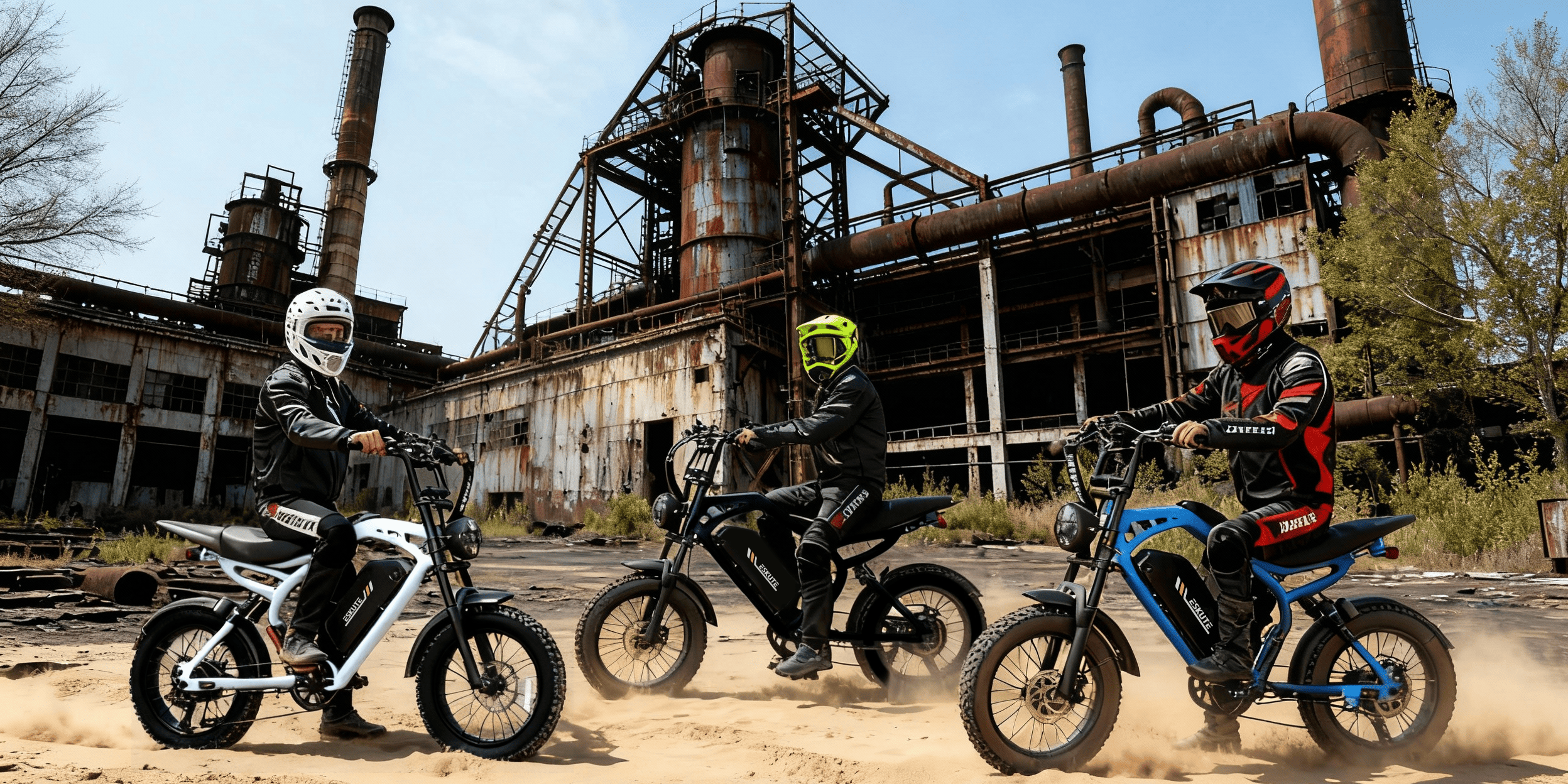
Moped-style e-bikes pack more power than standard kids' electric bikes, making them a lot more demanding for younger children. Many safety guidelines suggest these models tend to work best for teens 16 and older with solid riding experience. Younger kids need lighter, slower bikes designed for their age group.
What's the Difference Between Moped-Style and Kids' Electric Bikes?
When shopping for electric bikes for teens or younger riders, you'll notice two very different categories. Understanding these differences helps you pick the right fit.
| Feature | Moped‑Style E‑Bikes | Kids Electric Bikes |
| Appearance | Look like small motorcycles with step‑through frames | Look like regular bicycles with added motor |
| Motor Power | ~500–1500 W (some models higher) — stronger thrust & torque | ~200–350 W — light‑duty assist only |
| Top Speed | ~28–30 mph (higher on performance models) | ~12–15 mph typical for kids’ models |
| Weight | ~75–95 lbs or more (heavier frame) | Under ~50 lbs |
| Pedals | Often include pedals with multi‑speed drivetrains | Traditional functional pedals |
| Seating Position | Upright scooter/moto‑style | Standard bicycle riding position |
| Battery System | Typically 48 V+/15–25 Ah (~700–1200 Wh) for 40–70+ miles range | Smaller batteries (often 180–400 Wh), ~5–20 miles range |
| Acceleration | Quicker, stronger acceleration thanks to larger motors | More gradual acceleration |
| Stopping Distance & Max Speed | Longer at higher speeds (depends on brakes/tires) | Shorter due to lower speeds |
| Wheel Size | Often 16–20″ with fat tires for traction | 16–20″ regular bike tires |
| Frame Design | Adult proportions, step‑through frame | Child‑proportioned frame |
| Extra Features | Bright headlight, multi‑function display, optional mirrors/racks | Basic lights and reflectors |
| Battery Capacity & Range | Large capacity (often 48 V 15–25 Ah) for longer rides & mixed terrain | Smaller capacity (often under ~400 Wh) suited for shorter play use |
| Usage Scenarios | Daily commuting, errands, open‑road cruising, off‑road fun & tricks because of stronger power and traction | Easy neighborhood rides, playground fun, short family outings |
| Playability & Terrain | More “playable” with strong torque & fat tire stability — can handle light off‑road, broken pavement, adventurous riding | Best for paved paths, parks, and easy terrain |
| Target Age | Often recommended for older teens & adults | ~8–13 years old (some models from age ~6) |
The performance gap between these two categories is substantial.
- Youth electric bikes offer manageable speeds that give young riders time to react and learn proper control.
- Moped-style bikes deliver motorcycle-like power that can easily overwhelm inexperienced riders.
For electric bikes for teens ages 14-15, it’s usually safer to stick with traditional pedal-equipped models rather than jumping to moped styles. For older teens who are already comfortable riding—and especially those who are 16+, models like the Eskute V100 and V200 can be a good “in-between” example: they’re quick and exciting (V100 is rated up to 28 mph, while V200 is rated up to 29 mph), and both are sold in a Class 3-style e-bike category (always check local rules and your bike’s settings), which makes them easier to keep predictable on the road.
What Age Should Kids Start Riding Electric Bikes?
Age guidelines exist for good reason. Getting this decision wrong puts your child at serious risk of injury.
Age Recommendations by Bike Type
- For the best electric bike for kids ages 8 to 10, look for models with 250-watt motors and 12 mph speed limits.
- Kids ages 11 to 13 can handle 350-watt motors hitting 15 mph.
- Teenagers 14 to 15 often do best with 500-watt youth electric bikes capped at 20 mph.
- Only mature 16-year-olds with prior riding experience should attempt moped-style bikes.
Legal Age Requirements by Region
Laws vary wildly across the United States.
- For example, California restricts Class 3 e-bike use to riders age 16+ (and requires helmets for riders under 18).
- Some cities ban electric bikes for teens entirely on certain paths.
- Check your local Department of Motor Vehicles website before making a purchase.
Physical Development Factors
Choosing the right electric bike depends on your child’s height and reach. They should straddle the bike with both feet flat and reach the brakes comfortably. Eskute provides clear height guides for each model—V100, V200, and Nova Mini—so you can easily see which bike fits your child for a safe and confident ride.
Maturity and Responsibility Assessment
Does your child follow rules consistently? Do they wear their seatbelt without being told? Have they shown good judgment on regular bicycles? Kids who take shortcuts, ignore warnings, or show off for friends aren't ready for motorized transportation.
Beginner vs. Advanced Rider Considerations
First-time riders benefit from plenty of supervised practice on regular bikes before touching anything electric. They should demonstrate smooth starts, controlled stops, and confident turns in both directions. It’s generally a bad idea to jump straight to a moped-style model as a first electric ride, regardless of age or confidence.

How to Choose the Best Electric Bike for Kids?
The right bike grows with your child and keeps them safe while they learn. Shopping smart now saves money and hospital visits later.
Age-Appropriate Sizing Guide
Wheel size corresponds to rider age and height.
- 16-inch wheels fit kids 3 feet 8 inches to 4 feet 2 inches tall, typically ages 5 to 8.
- 20-inch wheels work for heights 4 feet to 4 feet 8 inches, covering ages 8 to 12.
- 24-inch wheels match riders 4 feet 5 inches to 5 feet 2 inches, generally ages 11 to 15.
Motor Power Recommendations
Younger kids need less power.
- A 250-watt motor provides plenty of assist for flat terrain and gentle hills. Step up to 350 watts if your neighborhood has steep grades.
- The 500-watt range works for heavier teens or serious hill climbing.
- Anything beyond 750 watts ventures into moped territory and may trigger registration or licensing requirements depending on your state or city rules.
- Also note that some brands list “peak” motor power (a short burst) rather than continuous output—so it’s smart to look at real-world speed modes and your local e-bike class rules instead of judging by one headline number.
Maximum Speed Limitations
Look for bikes with adjustable speed caps. Many quality youth electric bikes let parents set maximum speeds through a phone app or display panel. Start beginners at 8 to 10 mph and gradually increase limits as skills improve. The best electric bike for kids includes at least three speed modes.
Battery and Range Requirements
A 48V 13Ah battery can deliver around 60 miles of range under typical riding conditions, which is plenty for neighborhood use. If the rider does more hill climbing or off-road riding, power draw increases and the range will drop—but it should still comfortably meet most riders’ needs. With proper care, lithium-ion batteries can last 500 to 1000 charge cycles, or about 3 to 5 years of regular use.
Build Quality Indicators
- Check for welded aluminum frames rather than bolted steel.
- Disc brakes (mechanical or hydraulic) are a strong safety upgrade for teen e-bikes, and wider tires can help with stability.
- Look for puncture-resistant tires at least 2 inches wide.
- Avoid bikes with excessive plastic components, which crack easily in crashes.
Rear Suspension Matters
Many youth e-bikes come with front suspension forks only, but Eskute’s V100/V200 feature both front and rear suspension. Rear suspension provides a smoother, more comfortable ride on rough terrain or off-road paths, improving control and reducing fatigue on longer or uneven rides. Combined with all-terrain tires, this setup makes the V100/V200 stable and forgiving, ideal for adventurous teens who want to ride beyond smooth pavements while maintaining comfort and handling.
Safety Certifications to Verify
Reputable electric bikes for teens carry TÜV certification, which indicates that key components such as the battery and electrical system have been tested by an internationally recognized third‑party safety authority. The CPSC sets standards for all bikes sold in the US, including brake performance and reflector placement. Ask sellers for certification documents if you don't see stickers on the bike itself.
What Safety Features Are Essential for Youth Electric Bikes?
Safety features separate toys from reliable transportation. Don't compromise on these basics.
Reliable Braking Systems
Disc brakes (including mechanical disc brakes) can provide strong, consistent stopping power for teen e-bikes, especially in rain, dust, or mixed terrain. Your child should be able to stop quickly and confidently from speed using controlled pressure on each brake lever.
In practical terms, you want brakes that feel responsive, not the kind that makes your teen panic-squeeze and skid. Bikes built for teens who want a more adventure-friendly ride (like the Eskute V100/V200 with fat tires + suspension) often feel more planted under braking, which can help teens learn smoother, more confident stops.

Battery Reliability and Water Resistance
A reliable battery is crucial for safe, consistent performance. Look for models with TÜV, UL, or other professional certifications, which verify safety and quality standards. Many certified e-bike batteries also feature an IP54 waterproof rating, meaning they are protected against rain splashes and light road spray, ensuring safe rides even in wet conditions.
Speed Limiting Technology
Programmable speed limits let you match bike performance to rider skill level. Even without advanced “app controls,” picking a bike with clear assist levels (and teaching your teen to start in a slower mode first) is a big safety win.
Lighting and Visibility Equipment
Built-in front and rear lights that run off the main battery work better than clip-on accessories. A bright front light that clearly illuminates the road ahead and rear visibility lighting helps a lot for early evening rides. Reflective sidewall tires and frame decals make riders visible from all angles.
Parental Control Functions
Not every teen e-bike includes GPS or app tracking, so focus on simple, practical controls your child will actually use, like a readable display, predictable assist steps, and an easy-to-reach throttle/brake layout.
Stability and Handling Features
Wider handlebars provide better leverage for steering corrections. A longer wheelbase increases straight-line stability. Lower center of gravity improves balance, especially important on heavier youth electric bikes.
Required Protective Gear
Look for CPSC-certified bike helmets or ASTM F1952 downhill mountain bike helmets for faster electric bikes for teens. The helmet should sit level on the head, covering the forehead. Gloves protect hands during falls. Knee and elbow pads make sense for beginners.
FAQ
Q1. Are Electric Bikes Safe for Kids with No Prior Cycling Experience?
No. Kids need solid, regular biking skills before touching any youth electric bike. They should comfortably ride a pedal bike for a while (not just a few days) to build muscle memory for balance, braking, and turning. Electric motors amplify mistakes, so weak foundational skills lead to crashes. Even entry-level kids' electric bikes reach 12 mph quickly, giving little time to think through corrections. Start children on balance bikes around age 3, graduate to pedal bikes by age 6, then introduce electric assist around age 9 or 10 if they demonstrate strong control and judgment.
Q2. What Maintenance Do Kids' Electric Bikes Require Compared to Regular Bikes?
Electric bikes for teens need everything regular bikes do, plus battery care and electrical checks. Chain lubrication every 100 miles, brake pad inspection monthly, and tire pressure checks weekly remain standard. Additionally, charge batteries every 30 days, even when not riding, to prevent capacity loss. Check all electrical connections quarterly for corrosion or looseness. Most youth electric bikes need professional maintenance tune-ups twice yearly instead of once.
Q3. Can My Teen Ride Their Electric Bike to School Legally?
It depends on local laws and school policies. Many states allow electric bikes for teens on bike paths and roads, but ban them from sidewalks. Schools often prohibit any motorized vehicles on campus, including e-bikes, due to liability concerns. Some districts created designated e-bike parking areas with charging stations. Check your school handbook and city ordinances before assuming it's allowed. If permitted, ensure your teen knows traffic laws, hand signals, and safe route planning. Consider requiring them to walk the bike through parking lots and crowded areas.
Conclusion: Prioritizing Safety for Young Riders
Moped-style e-bikes belong in the garage until your teen turns at least 16. Younger kids thrive on properly sized kids' electric bikes that match their skills. Start with conservative power levels and verify safety certifications before buying. Your child's safety depends on making smart choices now.


Share:
2026 Valentine’s Day Cycling Gift Shopping Guide: How to Save on E-Bikes
Where to Ride With Friends: Easy Electric Tricycle Route Ideas