
Getting the right size e-bike for a teenager matters more than most people realize. A poor fit can make riding feel awkward or unsafe, and wheel size plays a surprisingly large role in both. It shapes how the bike handles, how easy it is to stop, and how comfortable a ride feels day to day.
A Practical Height-to-Wheel-Size Chart for Teens
With the basics covered, here is a straightforward reference for matching wheel size to teen height. These ranges reflect general sizing patterns across most electric bikes for teens:
| Wheel Size | Typical Height Range | Rider Profile |
| 16" | 4'8" – 5'2" | Younger or shorter teens, beginners |
| 20" | 5'0" – 5'6" | Mid-height teens, moderate experience |
| 24" | 5'4" – 5'10" | Taller teens, growing riders |
| 26" | 5'7" and above | Older teens near adult height |
These ranges overlap intentionally. A teen at 5'2" could ride either a 16" or 20" wheel depending on their experience and preference for ground clearance. When in doubt, the safer starting point for a beginner is the smaller of the two options.
Seat Height Is the Real Variable
Wheel size determines how high the bike sits, but seat height is what the rider actually feels. A good rule of thumb is that when seated, a teen should be able to place both feet flat or nearly flat on the ground. When pedaling, the knee should have a slight bend at the lowest point of the stroke, not be fully extended.
Always check the minimum and maximum seat height of a specific model before buying. Two bikes with the same wheel size can have very different seat height ranges depending on frame design.
Adjustability Matters as Teens Grow
Teen riders can gain several inches in a single year. A bike that fits well today may feel noticeably small in six months. Look for models with a wide seat height adjustment range. Some frames also offer multiple standover heights, which adds flexibility as the rider grows. This is one of the most practical ways to extend the useful life of a teen's e-bike.
How Wheel Size Affects Handling and Confidence
Beyond fit, wheel size directly influences how a bike handles. This is worth paying attention to when choosing electric bikes for teens, especially those who are still developing their riding skills.
Smaller Wheels and Low-Speed Control
Smaller wheels respond more quickly to steering input. That makes them easier to maneuver at low speed and in tight spaces. For a teen navigating a school bike rack or riding in a crowded park, a 16" or 20" wheel is noticeably easier to handle than a 26".
The lower center of gravity also makes the bike more forgiving. Small corrections are easier. Tipping is less likely during slow or awkward moments.
Larger Wheels and High-Speed Stability
Larger wheels carry momentum better. At higher speeds, they feel more stable and less affected by small bumps or road irregularities. For a teen who has built confidence and is riding longer distances or on varied terrain, a 24" or 26" wheel delivers a smoother, more composed ride.
The tradeoff is that larger wheels sit higher. A teen who is not yet tall enough to reach the ground comfortably on a 26" bike may feel less secure at stops, which can undermine confidence rather than build it.
Terrain and Riding Style Also Influence the Right Size
Height is the primary factor, but where and how a teen rides can also shift the ideal wheel size slightly.
A teen who rides mostly on smooth pavement can follow the height chart closely. A teen who rides on gravel paths, grass, or light trails may benefit from sizing up slightly for better rollover ability, as long as the seat height still allows comfortable ground reach.
Heavier, wider tires on the same wheel size also raise the effective ride height a small amount. An e-bike with 4" fat tires will sit slightly taller than one with 2" tires on the same wheel, so seat height specs are worth checking directly rather than estimating from wheel size alone.
Quick Reference: Matching Height to Wheel Size by Age Group
This table combines height and typical age ranges to give a fuller picture:
| Age Range | Typical Height | Recommended Wheel Size |
| 10–12 years | 4'6" – 5'0" | 16" |
| 12–14 years | 4'10" – 5'4" | 16" – 20" |
| 14–16 years | 5'2" – 5'8" | 20" – 24" |
| 16–18 years | 5'5" and above | 24" – 26" |
Age is a loose proxy here. Height is always the more reliable guide. A tall 13-year-old will be better served by a 20" or 24" wheel than a 16", regardless of age group.
A Note on Teen-Specific E-Bike Models
Most e-bike brands build for adult proportions and adjust from there. Some brands design teen models from the ground up with height and ground reach built into the frame geometry from the start.
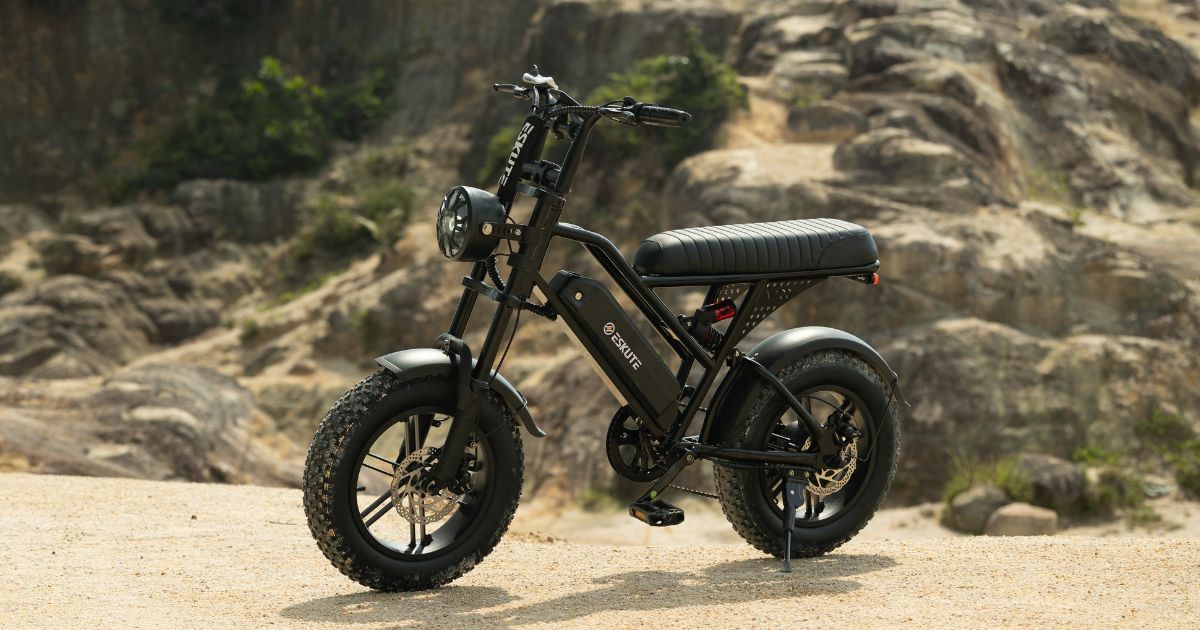
The Eskute V100 and V200 are two examples worth knowing about.
The V100 uses a 16" x 4" fat tire with a 28.3" seat height, suited for riders between 5'0" and 6'2". Don't let the size fool you; its 1500W motor provides massive explosive power for conquering steep hills and enough torque to pull through muddy or sandy paths where smaller bikes might stall.

The V200 steps up to a 20" x 4" fat tire with a 31.5" seat height, designed to accommodate riders from 5'4" all the way up to 6'5". Its 1300W motor and ultra-wide tires offer incredible stability and snow/sand flotation. It’s designed for the teen who wants the thrill of off-road exploration without sacrificing the traction needed to stay upright in slippery conditions.

Whatever model you consider, use the seat height spec as your primary check, then verify the wheel size aligns with the height chart above.

Why Performance Matters for Safety
While "power" sounds like it's just for speed, high wattage and all-terrain tires are vital safety features for teens:
- Hill Climbing: Higher wattage (1300W–1500W) ensures the bike doesn't lose momentum on steep inclines, preventing awkward mid-hill stalls.
- Terrain Mastery: Wider, "fat" tires provide a larger contact patch, making the bike much harder to tip in loose dirt, gravel, or snow.
- Confidence: A bike that can easily "climb out" of a sand trap or mud hole builds a rider’s handling skills and keeps the experience fun rather than frustrating.
Before You Buy: A Simple Sizing Checklist
- Can the teen place both feet flat or nearly flat on the ground when seated?
- Is there a slight knee bend at the bottom of the pedal stroke?
- Does the seat post have enough adjustment range to last through a growth phase?
- Does the wheel size match the teen's current height, not just their age?
- Is the bike light enough for the teen to handle when not riding?
Pairing the right-sized e-bike with the best bike lock for electric bike security is also a practical step from day one. A hardened U-lock or heavy-duty chain lock rated for e-bikes is a worthwhile investment alongside the bike itself.
Find the Right Fit and Ride with Confidence
Wheel size and seat height work together to determine how safe, comfortable, and enjoyable an e-bike feels for a teen. Start with height, use the chart as a guide, check the actual seat height specs on any model you consider, and think about how much room a teen has left to grow. Get those details right, and everything else falls into place.

Frequently Asked Questions
Q1: What Wheel Size Is Best for a 14-Year-Old?
Height matters more than age. Most 14-year-olds fall between 5'0" and 5'6", which puts them in the 20" to 24" wheel range. A shorter 14-year-old around 4'10" to 5'2" will likely feel more comfortable and secure on a 16" or 20" wheel where ground reach is easier.
Q2: Can a Teen Ride an Adult Electric Bike?
Yes, if the fit is right. Adult electric bikes often have seat heights and frame geometry built for riders 5'6" and above. A shorter teen may struggle to touch the ground safely. Electric bikes for teens are proportioned for this age group and tend to be a safer, more comfortable starting point.
Q3: How Do I Know If a Wheel Size Is Too Big for My Teen?
The clearest sign is that the teen cannot place both feet flat or nearly flat on the ground when seated. If they have to tip the bike significantly to one side to reach the ground, the wheel size is too large for their current height. This creates a real safety risk, especially in stop-and-go situations.
Q4: Should I Buy a Bigger Wheel Size to Allow Room for Growth?
Only if the teen can still reach the ground safely at the current size. Sizing up one increment can extend the bike's useful life, but ground reach should never be compromised. A better approach is to choose a model with a wide seat height adjustment range so the same bike grows with the rider.
Q5: What Lock Should I Use With a Teen's Electric Bike?
The best bike lock for electric bike security is a hardened steel U-lock or a heavy-duty chain lock rated for e-bikes. A lightweight cable lock is not enough on its own. Always secure the lock through the frame and to a fixed anchor point, not just around a wheel.


Share:
First-Time Guide to Kids' Electric Dirt Bikes: Safety, Setup, and Riding Tips
Commuting by E-Bike vs Driving: Which Saves More Money in 2026