
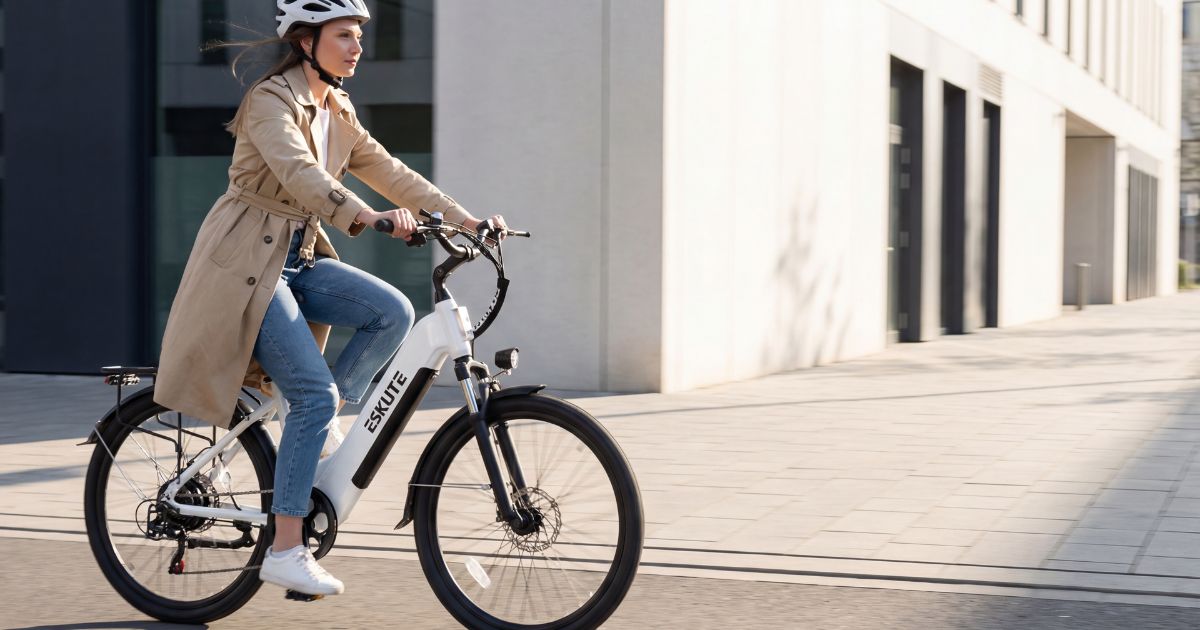
Gas prices don't sit still. Gas prices rarely sit still, and the unpredictable nature of global energy markets means commuters are often the ones paying for it at the pump.
For anyone spending a significant portion of their income just getting to work, this is a great moment to look at what an e-bike actually costs to run compared to a car.
Why Rising Energy Costs Are Shifting the Commuting Equation
The Strait of Hormuz is one of the world's most critical oil chokepoints. According to the U.S. Energy Information Administration, roughly one-fifth of global oil supply passes through it each day, with no practical alternative route for most of that volume. When tensions flare in that region, crude prices climb quickly, and fuel costs follow.
That's the situation in 2026. Brent crude surpassed $100 per barrel in March, and the disruption has been described as the most severe energy supply shock in decades. According to the Federal Reserve Bank of Dallas, this oil price spike could raise average WTI prices to around $98 per barrel and shave nearly 3 percentage points off global GDP growth in a single quarter.
Drivers have limited options for reducing that cost. An electric bike commuter operates on a completely different equation. Electricity prices are far more stable, and the amount of power an e-bike consumes is minimal. For daily commuters, the savings start adding up almost immediately.
How Much You Actually Spend Driving vs Riding an E-Bike Each Year
The real difference between a car and an e-bike shows up in the numbers. Here's a breakdown covering the main expense categories.
Fuel and Maintenance
The average driver covers about 15,000 miles per year. At current fuel prices, that translates to roughly $2,000 to $3,000 in gas alone. Maintenance, oil changes, tire wear, and registration push the total higher. Factor in insurance and parking, and annual car costs can exceed $8,000 for many commuters.
The cost to run an e-bike is a different story. A full charge costs around $0.10 to $0.20. Daily riding through an entire year typically adds up to under $50 in electricity.
What the Numbers Look Like Side by Side
| Cost Category | Car (Annual Est.) | E-Bike (Annual Est.) |
| Fuel / Electricity | $2,000–$3,000 | $30–$50 |
| Maintenance | $1,000–$1,500 | $100–$200 |
| Insurance | $1,500–$2,000 | $0–$100 |
| Parking | $500–$2,000 | $0 |
| Total | $5,000–$8,500 | $130–$350 |
So, Which One Actually Saves More?
The e-bike wins, and it's not particularly close. The gap between annual car costs and e-bike running costs can easily exceed $5,000 for a typical urban commuter. Even after accounting for the upfront purchase price, an electric bike under $1000 can often pay for itself within the first several months of regular use. With gas prices at current levels and unlikely to drop soon, that gap is only widening in 2026.
Charging Convenience and Where an E-Bike Can Take You
Beyond the numbers, daily usability matters. People want a commute option that fits their lifestyle without adding new complications.
Charging Without a Garage
Most modern e-bikes use removable batteries that charge from any standard wall outlet. No charging station required. No garage needed. For apartment dwellers, this is a practical advantage that often goes overlooked. The battery sits in a corner of the living room while it charges, and the process is no more complicated than charging a laptop.
Reaching Places a Car Simply Cannot
An e-bike opens up routes a car can never access. Bike paths, park trails, coastal promenades, and urban shortcuts all become part of the commute. Traffic stops being a constant source of stress, because you're often moving through it rather than sitting in it.
Beach access, green spaces, and car-free zones that add significant time to a car journey become quick, enjoyable detours on a bike. The commute itself can become something to look forward to.
Performance That Holds Up in Real Conditions
A common concern is whether an e-bike can actually keep pace with the demands of a real daily commute. On flat roads, that's rarely an issue. Hills, rough pavement, and longer distances are where cheaper models tend to fall short.
Speed and Range
A well-built electric bike commuter can reach speeds of 25 to 28 mph and cover 50 to 70 miles on a single charge. What truly sets a high-performance model apart is its energy capacity. Equipped with a high-capacity 48V 17.5Ah battery, these bikes can cover 50 to 70 miles on a single charge. For the average urban commuter, this means you can often power through a full week of daily trips without ever needing to plug in, offering a level of "set it and forget it" convenience that fits a busy lifestyle. Motor output matters too. A robust motor with a peak power of around 1500W handles inclines smoothly without requiring the rider to overexert themselves, making a real difference on varied urban terrain.
Tires and Ride Quality
Tire choice affects how an e-bike handles daily conditions. All-terrain tires in the 26" range manage wet roads, gravel, and potholed streets without losing grip or control. A front suspension fork with around 80mm of travel absorbs most of the vibration from uneven surfaces. Riders who switch from a car often comment that the commute is more comfortable than expected.
These are the qualities that separate a practical moped style ebike from one that only works on ideal surfaces. If you're looking for a model that covers all of these bases, the Eskute C200 series is worth a look.

-
The C200-ST (Step-Through): Features a low-step frame designed for maximum accessibility. It is the ideal choice for commuters who prioritize comfort and ease of mounting—whether you’re navigating frequent stop-and-go city traffic, enjoying a weekend leisure ride, or riding in professional or casual attire. For those needs, the C200-ST delivers on every front.
-
The C200-SO (Step-Over): Utilizes a traditional high-step frame that offers a more rigid, athletic stance. This model is tailored for riders who prefer a sportier, more dynamic feel and a slightly more aggressive riding position for spirited urban commutes. That's exactly what the C200-SO is built for.

Both models come equipped with a detachable battery, ensuring that charging at home or the office remains as simple as plugging in a phone, with no special setup required.
Start Saving Today
An e-bike saves considerably more money than a car for most daily commutes, and 2026's energy market has made that gap wider than ever. Running costs are low, charging is simple, and the routes available to a rider stretch well beyond what a car can access. If you're ready to cut what you spend getting to work each day, switching to an e-bike is one of the most straightforward ways to do it.
Frequently Asked Questions
Q1: How Much Does It Cost to Charge an Electric Bike?
Very little. A full charge on most e-bike batteries costs between $0.10 and $0.20, depending on your local electricity rate. Over a full year of daily commuting, total charging costs typically stay well under $50. That's a fraction of what gasoline costs for the same distance traveled.
Q2: Is an Electric Bike Fast Enough for City Commuting?
Yes, for the vast majority of city commutes. Most commuter e-bikes reach 25 to 28 mph, which keeps pace with urban traffic. Access to bike lanes and shortcuts also means riders can often arrive faster than a car traveling the same route during peak hours.
Q3: Can You Charge an E-Bike in an Apartment?
Yes, easily. E-bikes with removable batteries let you detach the battery and charge it from any standard wall outlet indoors. No special installation is needed. The battery is compact enough to sit in a living room or bedroom corner without taking up noticeable space.
Q4: How Far Can an Electric Bike Travel on One Charge?
It varies by model and riding conditions. Many commuter-focused e-bikes offer 50 to 70 miles per charge. For a typical daily commute of 10 to 20 miles round trip, one charge can last several days before a top-up is needed.
Q5: Are Electric Bikes Worth It Compared to Cars for Commuting?
Yes, for most urban and suburban commuters. The potential savings on fuel, insurance, parking, and maintenance can add up to several thousand dollars per year. E-bikes also sidestep traffic, reach more destinations, and cost far less to maintain. A high-quality electric bike under $1000 is a smart investment that can realistically pay for itself within the first year of regular commuting.


Share:
Teen E-Bike Sizing Guide: Matching Wheel Size to Height
Can You Ride an Electric Trike After a Stroke or Mobility Setback