


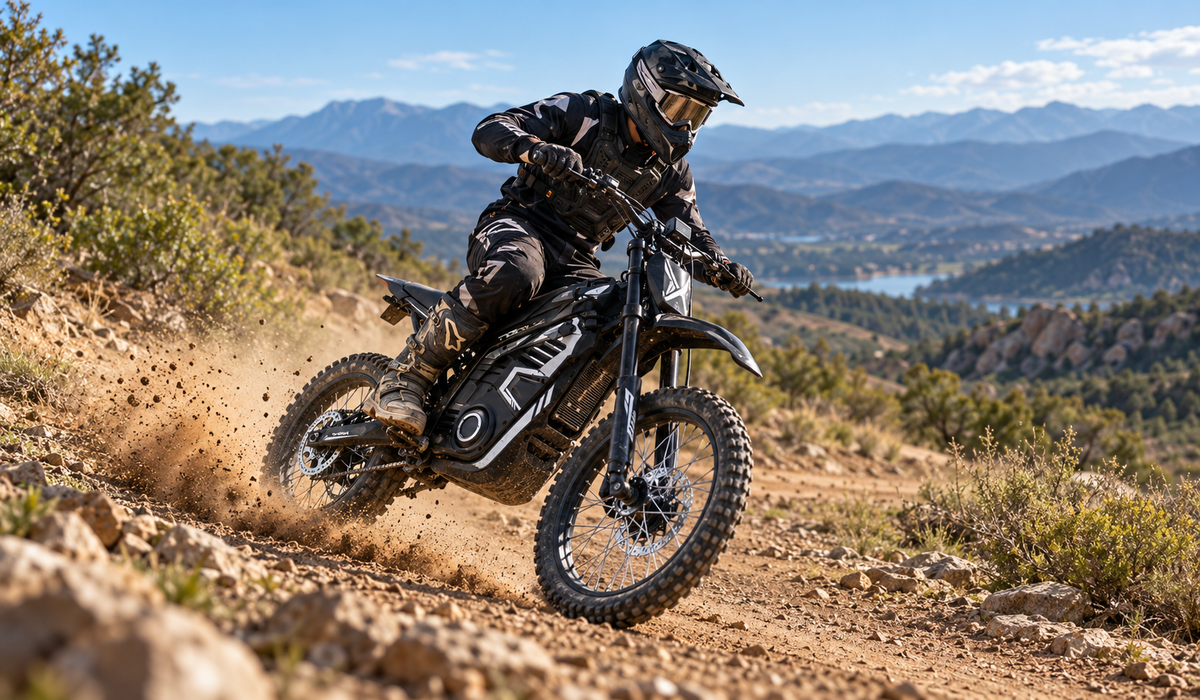
A weekend at an off-road riding area often starts with a simple concern: will there be enough battery for the afternoon—and the ride back? A few loops with friends and a long route into unfamiliar terrain can fill the same day, but they use energy very differently.
The ESKUTE NOVA X has a 48V 23Ah battery and an advertised range of up to 60 miles. Understanding what that means starts with the planned outing: how much time will actually be spent riding, how demanding the route is, and where each session ends.

Understanding the ESKUTE NOVA X Range in Real-World Conditions
The NOVA X’s battery stores the energy available for acceleration, climbing, and continued riding. Its specifications provide a starting point for planning.
| NOVA X Battery Specifications | Details |
|---|---|
| Nominal battery voltage | 48V |
| Battery capacity | 23Ah |
| Calculated nominal energy | Approximately 1,104Wh |
| Advertised range | Up to 60 miles |
| Motor | 4000W peak |
Multiplying 48V by 23Ah gives approximately 1,104Wh of nominal energy. This describes the battery’s energy capacity; it cannot be converted directly into a fixed number of trail miles.
The advertised 60-mile maximum should therefore be treated as an upper figure, rather than an expected result for every outing. Loose ground, repeated climbs, and frequent acceleration can use the available energy faster.
The motor also does not operate at its 4000W peak continuously. An easy stretch and a demanding uphill section draw on the battery differently. Rider weight, carried equipment, temperature, and battery condition further influence how far a charge will take the bike.
How Do Speed Settings Affect NOVA X Range?
The NOVA X manual describes controls for increasing and decreasing the speed setting. Their practical purpose is to help riders select a setting suited to the next session.
Lower Speed Settings
A lower setting can help keep a relaxed loop at a restrained pace. It gives riders a way to match the bike’s available speed to a quieter session without selecting a higher setting they do not intend to use.
Higher Speed Settings
A higher setting makes more speed available where the terrain, riding area, and rider’s ability permit it. Selecting it does not mean the motor continuously uses maximum power, nor does it establish how many miles remain.
Matching Settings to the Riding Session
Before leaving the starting area, consider whether the next session is a gentle loop or a more demanding run. Select accordingly, then monitor how the ride develops. Two riders using the same setting can consume different amounts of energy through their route choices and throttle use.
What Riding Habits Have the Biggest Impact on Battery Range?
Once a setting is selected, actual riding behavior determines how the battery is used. Three patterns matter particularly when planning a weekend outing.
Frequent Starts vs. a Steadier Pace
Every restart requires the motor to bring the bike and rider back up to speed. Repeated short runs can therefore consume meaningful energy while adding relatively little distance.
Where visibility and trail conditions allow, gradual acceleration and a steadier pace avoid unnecessary bursts of demand. Necessary stops always take priority over conserving charge.
Repeated Climbs vs. Easier Loops
Each climb requires energy to lift the bike and rider. Repeating an uphill section several times can make a short outing demanding even when the trip reading remains modest.
For NOVA X owners, the number and length of climbs matter alongside mileage. Another uphill lap asks more of the remaining charge than an easy loop near the starting area.
Repeated Hard Acceleration vs. Occasional Bursts
Repeatedly slowing and accelerating hard places frequent demands on the battery, even without coming to a complete stop.
Strong acceleration may be part of the enjoyment. After a session built around those bursts, checking battery status before adding a longer route helps keep the return journey in the plan.
Can the NOVA X's 60-Mile Range Last a Full Day of Riding?
A full day at a riding area is not the same as a full day of continuous riding.
Breaks, conversations, and watching friends ride can separate several shorter sessions. The important distinction is how much riding takes place between those breaks—and how demanding it is.
| Riding Plan | Main Concern | Planning Advice |
|---|---|---|
| Short weekend sessions | Adding several short loops | Review battery status after returning to the starting area. |
| Long-distance adventures | Completing the outward and return journey | Allow for the return terrain, detours, and an energy reserve. |
| Full-day mixed riding | Combining different sessions throughout the day | Track actual riding distance and battery use between sessions. |
Short Weekend Trail Sessions
Loops near the starting point provide a natural opportunity to reassess after each ride. The NOVA X manual identifies both a battery-status indicator and a TRIP distance readout.
Checking them while stopped helps an owner decide whether to take another lap. Over several outings, a familiar route becomes a useful personal reference for battery use at a particular pace.
Long-Distance Off-Road Adventures
A route that travels farther from the starting point needs more preparation. A mostly downhill outward leg can leave a demanding uphill return, so distance alone does not describe the energy required.
Buyers with a fixed route in mind should look for range results from comparable terrain and rider loads. Owners can build toward that route through shorter outings. Charging stops belong in the plan only when the location, suitable equipment, and available time are confirmed.
Full-Day Mixed Riding
A morning loop, lunch break, and afternoon session offer opportunities to adjust the plan. Continuous riding leaves less flexibility.
The NOVA X’s advertised range does not establish that it will complete every full-day itinerary. For an outing with optional loops and regular returns to base, however, riders have more opportunities to decide how much riding to add.
How to Plan Your Riding Distance
Start with a familiar loop that returns to the same place. Note its distance, climbs, riding pace, and starting and finishing battery indications.
Use several comparable outings to plan a longer ride, allowing extra charge for harder terrain and detours. Battery indicators are a guide, not a precise miles-remaining forecast. Make the return decision before the indication becomes low, rather than treating the advertised 60 miles as a distance to reach.
How to Get the Most Out of Your NOVA X Battery
Small preparations help keep more of the outing focused on riding:
- Speed setting: Select a setting appropriate to the planned session and rider’s ability.
- Smooth acceleration: Build speed progressively where conditions allow, especially between nearby stopping points.
- Battery monitoring: Check battery status alongside TRIP distance while safely stopped, particularly before adding another loop.
- Tire maintenance: Keep tires in good condition and follow the recommended pressure guidance. Avoid changing pressure solely to chase additional range.
- Battery care: Follow the manual’s charging and storage instructions. Use the supplied charger or a manufacturer-approved replacement.
These habits support sensible use of the available energy. Familiarity with the route and the bike’s battery use remains the most useful basis for planning longer outings.
ESKUTE NOVA X Range & Battery FAQs
How Far Can the ESKUTE NOVA X Go on a Single Charge?
ESKUTE advertises up to 60 miles per charge. Actual range varies with terrain, speed, rider load, acceleration, temperature, and battery condition. The bike uses a 48V 23Ah battery with approximately 1,104Wh of calculated nominal energy.
Is the 60-Mile Range Realistic for Off-Road Riding?
It is an advertised maximum, rather than a dependable distance for every trail. Repeated climbs, loose surfaces, and demanding acceleration can reduce the distance available. A comparable off-road test is more useful for route planning than the maximum figure alone.
How Do the NOVA X’s Speed Settings Affect Range?
Speed settings help riders match the available speed to a session. A lower setting can encourage a more restrained pace, but no setting provides a fixed mileage. Actual throttle use, terrain, and load determine how the battery is consumed.
Does Riding at Higher Speeds Reduce Range per Charge?
Generally, yes. Sustained higher speeds increase energy demand, particularly through air resistance. That can leave less distance available before recharging. This refers to range on one charge, rather than the battery’s long-term lifespan.
Can the NOVA X Last a Full Day of Riding?
A day of shorter sessions with breaks is different from hours of continuous riding. Whether one charge is sufficient depends on the actual riding distance and demands of those sessions. The 60-mile claim alone cannot confirm full-day suitability.
How Can Riders Track Battery Use During an Outing?
The NOVA X display includes battery status and TRIP distance. Reviewing both between sessions helps riders understand their outing. Recording results from familiar routes provides a practical reference for future plans, although neither readout predicts the exact distance remaining.
Plan the Weekend, Then Choose the Ride
For riders planning regular trail sessions, the NOVA X combines a 48V 23Ah battery with the performance to make acceleration and climbing part of the outing. Its battery-status and trip displays help owners follow those sessions and build a clearer picture of their own range.
Start with the weekend that is actually planned: a few local loops, repeated climbs, or a longer journey. That makes the NOVA X’s battery specification useful—and helps leave room for the ride home.
Explore the ESKUTE NOVA X Electric Dirt Bike
For off-road use only in permitted areas. Actual range varies with riding conditions and battery use.


Share:
ESKUTE NOVA X: Built for Adventure, Designed for Every Trail
ESKUTE NOVA X Hill Climbing: Can 230Nm Torque Handle Steep Trails?