


How Does the NOVA X Handle Different Types of Hills?
The NOVA X’s hill-climbing potential is best understood through the routes a rider expects to use. These scenarios explain the demands on its published configuration; they are not measured climbing results.
Gentle, Firm-Surface Climbs
On a gradual climb with firm ground, steady pulling power and reliable grip matter more than maximum output.
The slope adds resistance, while the surface gives the rear tire a relatively consistent base to push against. Smooth throttle inputs help maintain an even pace.
For riders exploring rolling dirt tracks, the useful question is how comfortably the bike carries them through repeated rises. An extreme climbing claim has little value if those hills are not part of the regular route.
Steeper Inclines
Steeper hills place greater demands on sustained power and total load.
More force is needed to move uphill as the slope increases. A long ascent also keeps the motor and battery working under load for longer than a short rise.
The NOVA X’s 4000W peak motor and listed 230 N·m of torque make it relevant to this kind of riding. For buyers planning demanding climbs, the most useful evidence shows how the bike performs over a comparable slope and distance with a similar rider load.
Loose Dirt and Gravel
On loose ground, grip can limit progress before motor power does.
Gravel shifts beneath the tire, and soft soil adds resistance. Applying more throttle may spin the rear wheel rather than move the bike farther uphill.
This makes controlled power delivery especially important. A familiar climb can feel different after rain or changes in the surface, even though the bike and rider remain the same.

What Affects the NOVA X's Real-World Hill-Climbing Performance?
A useful climbing demonstration helps buyers connect what they see to the routes they plan to ride.
| Factor | What it means for buyers |
|---|---|
| Rider weight and equipment | Look for a rider load close to their own, including carried gear. More weight increases the uphill demand. |
| Slope and climb length | Distinguish a brief rise from a sustained ascent. Check whether the gradient was measured rather than estimated from the camera view. |
| Tire grip and surface conditions | Look for similar ground. Firm, dry dirt presents a different challenge from loose gravel or wet soil. |
| Battery and power delivery | Note the starting charge and whether the bike maintains its pace through the climb. |
These details make a demonstration more useful than footage of the bike simply reaching the top.
How Suspension and Tires Affect Hill-Climbing Control
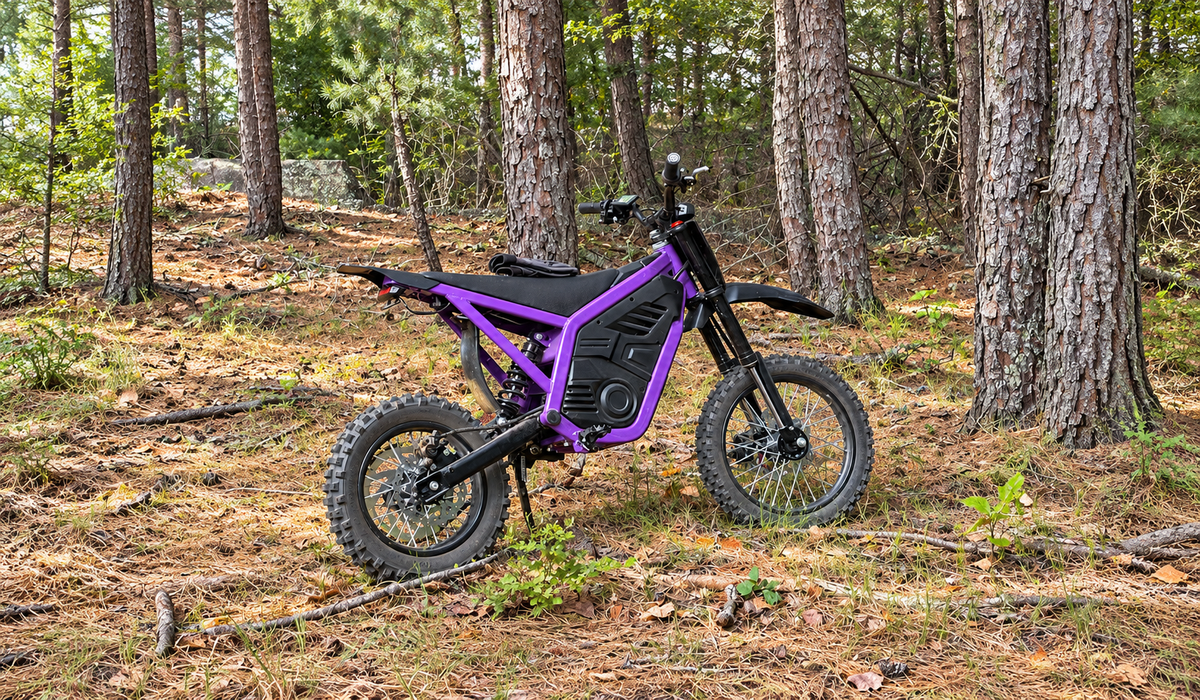
The NOVA X combines off-road tires with a hydraulic front fork and hydraulic rear shock. On uneven climbs, their job is to help the bike deal with changes in the ground.
The tires provide the contact through which pulling force moves the bike forward. Tread condition, pressure, and the surface affect how well that contact works.
The suspension allows the wheels to move over bumps and depressions while helping absorb impacts. That can reduce the jolts reaching the rider and help the wheels follow an uneven surface.
For climbs interrupted by ruts or rough patches, this is a practical reason to consider the NOVA X’s front and rear suspension. It addresses comfort and the bike’s response to the ground, although loose or slippery terrain can still limit traction.
Is the NOVA X Right for Your Hill-Riding Needs?
Riders who regularly encounter climbs have a clear reason to assess the NOVA X. Its motor, listed torque, and suspension are relevant to routes that combine rising ground with uneven surfaces.
For frequent steep or sustained ascents, comparable climbing evidence should carry weight in the purchase decision. The goal is to find a bike suited to the hills that will be ridden regularly.
For mostly flat routes and occasional gentle rises, easy handling and comfortable fit may matter more than maximum climbing ability. Those qualities influence the whole outing, including the time spent moving slowly or stopping.
New riders should prioritize a bike they can manage confidently while developing braking and basic hill-riding skills. Access to a permitted off-road area also needs to fit the ownership plan; the NOVA X is not street-legal.
The strongest reason to shortlist the NOVA X is that its configuration matches the intended riding. The torque figure starts that assessment, while the route and the rider complete it.


Share:
ESKUTE NOVA X Range: Can 60 Miles Last a Full Day of Off-Road Riding?
ESKUTE NOVA X 4000W Motor: Is This Much Power Really Necessary?