
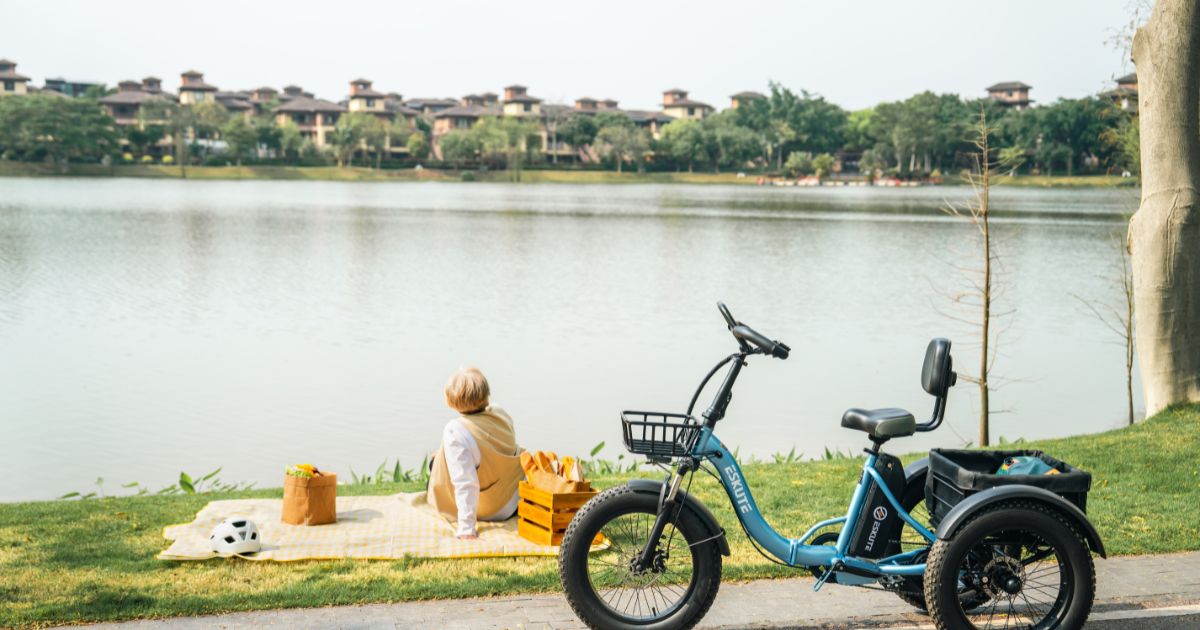
Getting back outdoors later in life is more than good exercise; electric trikes for seniors can help maintain and expand your daily mobility, from community errands to spontaneous afternoon rides. The options on the market vary widely, though. Choosing the right one means knowing which features actually matter for safety and comfort.
Stability Comes Before Everything Else in an Electric Trike for Seniors
Stability is the baseline, not a bonus. A trike that tips on a gentle slope or surges unexpectedly can become a hazard before a rider has time to react. Four specific design elements determine how stability truly feels, and they are worth examining before anything else.
Low Center of Gravity
A step-through frame lets riders mount and dismount without swinging a leg over a high crossbar. For seniors with limited hip flexibility or balance concerns, this one feature makes a meaningful difference. Low step-through geometry keeps the center of gravity close to the ground and reduces tipping risk during boarding.
Smooth Power Output
Sudden acceleration is a real hazard on electric trikes. A motor that surges can throw an unprepared rider off balance before they have had a chance to react. A well-tuned motor controller and quality pedal-assist sensors deliver power evenly, ensuring takeoff feels gradual and controlled. That matters especially for riders who prefer a predictable, gentle start. When comparing models, looking for reviews that highlight “smooth acceleration” is worth prioritizing over raw wattage figures alone.
Rear Differential
Cornering on three wheels introduces a challenge that two-wheelers avoid. The outer rear wheel needs to travel faster than the inner one through a turn. Without a differential, tight bends can feel jerky or cause the trike to lean uncomfortably. A rear differential allows each wheel to spin independently through curves. Turns feel smooth, and the risk of tipping on a bend is reduced considerably.
Parking Brake
Boarding and exiting a trike on any slope can be risky without a way to hold the vehicle in place. A parking brake keeps the trike stationary while the rider settles in or steps away. It is a small detail that removes a real risk for seniors dealing with reduced leg strength or balance.
Practical Features That Make Daily Riding Easier for Seniors
With stability addressed, the next question is whether a trike fits into actual daily life. A few practical features separate trikes that work for real senior use from those that just read well on paper.
Cargo Capacity
Many seniors primarily use a trike for community shopping or local errands. A generous rear cargo basket makes this practical rather than theoretical. Look for a trike that can handle at least 300 lbs total load, and more if you regularly carry heavier items or simply want a comfortable margin.

Foldability
Storage and transport are genuine concerns. A folding electric bike or trike that folds compactly can fit into an SUV or larger car trunk, which makes driving to a park or trail a real option. However, keep in mind that robust electric trikes are heavy (often 90+ lbs), so you will likely need a ramp or a riding partner to help lift it safely into your vehicle.
Range
Battery range shapes how far you can ride without worrying about charge. For everyday neighborhood errands, 40 to 50 miles per charge is usually more than enough. Longer outings or rural areas where charging is inconvenient call for 60 miles or more. Matching range to your actual use pattern avoids paying for capacity you will rarely need.
A Closer Look at the Eskute T300 and T300Pro
For riders who want a concrete starting point, the Eskute T300 and T300Pro are two models worth considering. Both use a step-through foldable frame, a 1,200W peak brushless motor, and a rear differential, covering the core stability requirements covered above. A parking brake is included on both. The table below summarizes the key differences between them.
|
Feature |
Eskute T300 |
Eskute T300Pro |
|
Motor Peak Power |
1,200W |
1,200W |
|
Frame |
Step-through, foldable |
Step-through, foldable |
|
Load Capacity |
400 lbs |
450 lbs |
|
Range |
~65 miles |
~75 miles |
|
Rear Differential |
Yes |
Yes |
|
Parking Brake |
Yes |
Yes |
The T300 suits riders who want a reliable daily trike for neighborhood use. The T300Pro adds extra load capacity and a longer range, which makes more difference on weekend outings or for riders who carry heavier cargo regularly. Both fold down to fit in most car trunks.

You can find the electric trikes for seniors on the Eskute website.
How Electric Trikes Help Seniors Reclaim Outdoor Freedom
Beyond specs and features, there is a broader benefit worth naming. Mobility limitations can quietly shrink a person's social world. Fewer trips out means fewer conversations, less time outdoors, and a gradual withdrawal from community life. A well-chosen electric tricycle for seniors can slow that process.
Three-wheel stability removes the balance demand that keeps many older adults from cycling again. Electric assist reduces the physical effort needed to cover useful distances. According to health research, regular physical activity can significantly reduce the risk of chronic diseases and improve mental well-being.
The most stable electric trikes for seniors also tend to reduce riding anxiety. Engaging in regular aerobic exercise through cycling lets riders focus on the ride rather than managing the vehicle.

Conclusion: Start Riding Again to Reclaim Mobility
Choosing the best electric trike for seniors comes down to stability first and practical fit second. Step-through frames, brushless motors, rear differentials, and parking brakes are the features that make a real difference in day-to-day safety. Foldability and cargo capacity determine whether the trike actually works for your routine. Get those fundamentals right and the trike becomes something you reach for regularly, not something gathering dust in the garage.
FAQs
Q1: Is an electric trike safe for seniors with poor balance?
Absolutely. The three-wheel structure removes the need to maintain balance at a standstill or while moving. Safety is further enhanced by a low step-through frame for easy mounting, a rear differential for stable cornering, and a parking brake to prevent the trike from rolling while you get on or off.
Q2: Is it difficult to learn how to ride an electric trike?
No. Most seniors find it easier than a traditional bicycle because there is no "balancing act" to master. Most riders feel confident within minutes. We recommend starting on a low-speed setting in a flat, open area to get used to the steering radius and the feel of the electric assist.
Q3: How do I choose between the Eskute T300 and the T300Pro?
It comes down to your specific needs: The T300 is ideal for daily neighborhood errands and light shopping. The T300Pro is the better choice if you need a higher load capacity (450 lbs) or a longer range (~75 miles) for extended weekend outings.
Q4: Can an electric trike fit in a car trunk?
Yes, foldable models like the T300 series are designed to fit into SUVs or large trunks. However, because these trikes typically weigh 90 lbs or more, we strongly recommend using a vehicle ramp or having someone assist you with lifting to prevent injury.
Q5: What is the most stable electric trike for seniors?
Real-world stability depends on a combination of features: a low center of gravity (step-through frame), a rear differential for smooth turns, and a motor controller that provides gradual, predictable acceleration rather than sudden jerks.


Share:
Why Loaded Trikes Tip Over in Corners and How to Make Sure Yours Does Not
First-Time Guide to Kids' Electric Dirt Bikes: Safety, Setup, and Riding Tips