


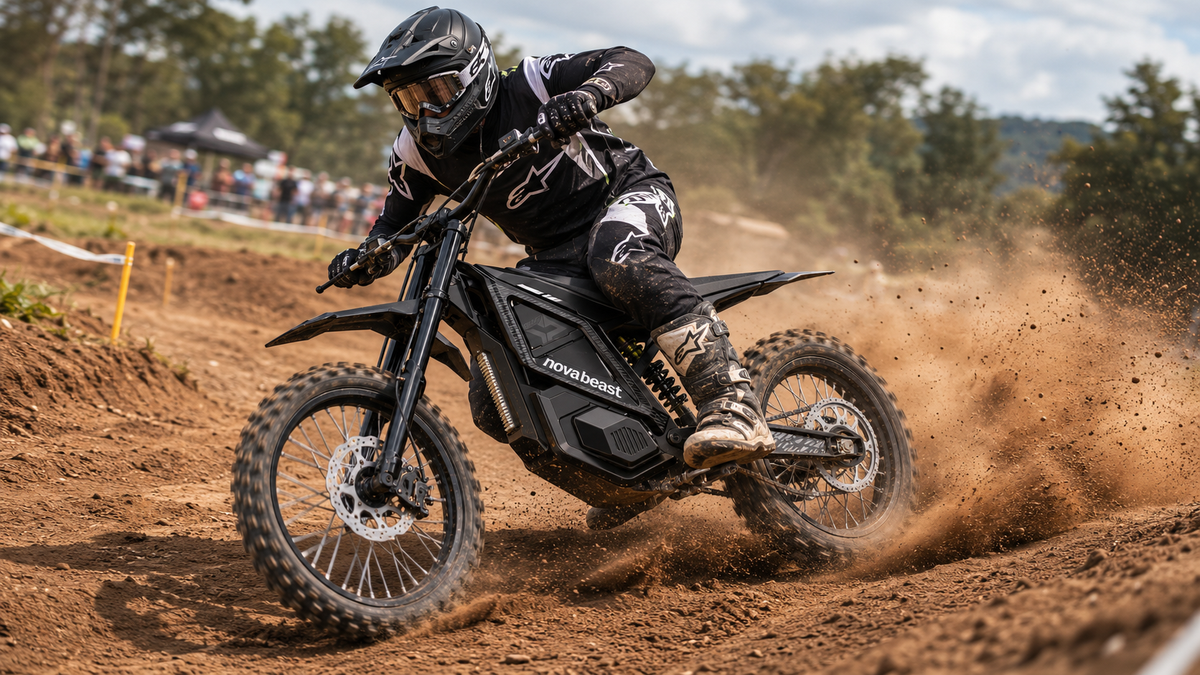
A shallow rut crosses the gravel just before the trail turns downhill. The front wheel rolls through first, followed by the rear, sending a second jolt through the seat. Ahead, a bend gives the rider another reason to ease off the throttle and adjust speed.
This is where the ESKUTE NOVA Beast’s suspension and brakes become part of the buying decision. Its front and rear hydraulic suspension, 130mm front suspension travel, and 190mm hydraulic disc brakes address two everyday demands of trail riding—absorbing impacts and managing speed.
For riders who regularly encounter rough ground, these features deserve as much attention as motor power. Their value becomes clearer when the trail starts changing beneath the wheels.

What Makes Suspension Important on an Electric Dirt Bike?
Suspension allows the wheels to move over uneven ground while reducing the impact passed through the bike to the rider. That matters when a route includes rocks, shallow ruts, or repeated bumps.
The NOVA Beast has 130mm of front suspension travel, which describes the available suspension movement as the front wheel meets an obstacle. Its hydraulic rear shock handles impacts arriving at the back of the bike.
Having suspension at both ends matters because the wheels encounter bumps at different moments. The fork responds first, while the rear shock deals with the same obstacle a moment later. Together, they help make uneven stretches more comfortable to ride.
The practical benefit is most relevant to riders whose usual trails contain repeated surface changes.
How Does the NOVA Beast Suspension Handle Different Off-Road Conditions?
Rocky and Uneven Trails
The front wheel can be dropping off one rock just as the rear begins to climb over another.
On this kind of ground, the NOVA Beast’s front and rear suspension have separate jobs. The fork responds to changes beneath the front wheel, while the rear shock absorbs impacts behind the rider. Both ends can respond as the bike moves through an uneven section.
For someone who regularly rides rocky tracks, this gives the suspension a clear purpose. It helps reduce the jolts that would otherwise travel through the handlebars, seat, and footpegs.
Dirt Trails and Repeated Small Bumps
A trail does not need large rocks to become tiring. Small ridges and shallow depressions can create a steady series of impacts over a longer stretch.
The Beast’s suspension is relevant here throughout the ride. Repeated bumps put both the front fork and rear shock to work, helping soften the ride as the wheels follow the surface.
One owner, Grip L., describes riding mainly on fire roads and light trails and reports that the suspension absorbs bumps well. That feedback offers a useful ownership perspective for shoppers planning similar outings. Read NOVA Beast owner reviews.
Uneven Turns
A corner can contain ruts or raised edges even when the approach looks smooth.
As the wheels cross those changes, suspension helps manage the impacts while the rider follows the chosen line. For the Beast, suspension at both ends is especially relevant when uneven ground continues through the turn.
Cornering speed still needs to suit the surface. Suspension can absorb a bump, but loose gravel or a slippery patch still requires careful steering and throttle control.
Why Do Hydraulic Brakes Matter on an Electric Dirt Bike?
Trail riding involves frequent changes of pace. A rider may need a small speed adjustment before a gentle bend, then more braking before a steeper descent.
The NOVA Beast uses 190mm hydraulic disc brakes. Hydraulic pressure transfers the rider’s input from the lever to the brake, allowing braking force to be adjusted through hand pressure.
The 190mm measurement refers to the brake disc diameter. Combined with hydraulic operation, this gives the NOVA Beast a braking setup designed for frequent speed adjustments on off-road trails. Actual braking performance depends on tire grip, speed, rider load, and brake condition.
| NOVA Beast Brake Feature | What It Means on the Trail |
|---|---|
| 190mm brake discs | Disc size contributes to braking leverage and heat management during speed adjustments. |
| Hydraulic operation | Lever pressure controls braking force, helping the rider adjust how firmly the brakes engage. |
| Hand-operated brake controls | Speed can be managed from the handlebars as the rider approaches bends and descents. |
These features are worth considering when a typical outing includes frequent braking between open stretches and tighter sections.
How Do the NOVA Beast Hydraulic Brakes Perform in Different Riding Situations?
Braking Before Tight Corners
A narrow bend often calls for more slowing than the open section before it.
The Beast’s hydraulic brake controls allow the rider to build braking pressure progressively on the approach. Entering at a suitable pace leaves more attention for steering through the corner and looking toward the exit.
For riders whose routes alternate between open ground and tight bends, this ability to make measured speed adjustments is a practical reason to prioritize the braking setup.
Descending Hills and Slopes
On a descent, the brakes may be needed repeatedly to keep speed manageable.
The NOVA Beast’s hydraulic discs provide the controls for those adjustments. Riders should establish a suitable pace before steeper sections and leave enough room to respond to changes ahead.
Long descents also generate heat in the brakes. Avoid building excessive speed or dragging the brakes continuously down an extended slope. If braking becomes weaker or lever feel changes, stop in a safe place and have the system checked before continuing.
Braking on Loose or Uneven Ground
Loose gravel can shift beneath a tire during braking. A stronger squeeze will not create grip that the surface does not provide.
Here, the useful quality is controlled application. The rider can increase lever pressure gradually while responding to the available traction. Slowing before reaching a loose section also reduces the amount of braking needed on the least predictable ground.
How Do Suspension and Brakes Work Together?
Consider a downhill trail with a rough corner followed by a gravel exit. The rider first uses the brakes to adjust speed before entering the bend. As the wheels cross uneven ground, the front fork and rear shock help manage successive impacts. Near the exit, braking pressure is adjusted again to suit the changing surface.
This sequence shows why the NOVA Beast’s suspension and brakes belong together in a buying decision. One helps the bike respond to the ground beneath it. The other gives the rider a way to manage speed as that ground changes.
For regular trail riders, the combination is useful across an entire route. A rough approach, a corner, and a descent can arrive within the same short stretch.
What Should Riders Consider When Choosing an Off-Road Suspension and Brake Setup?
The most useful starting point is the trail a rider expects to use regularly.
| Buying Consideration | What to Think About |
|---|---|
| Typical terrain | Repeated bumps, ruts, and rocky sections give front and rear suspension a regular job to do. |
| Corners and descents | Frequent speed changes make brake control an important part of the ride. |
| Rider fit | The rider should be comfortable reaching the levers and moving on the bike. |
| Maintenance | Suspension components, brake pads, discs, and hydraulic lines need routine attention. |
| Transport and storage | The bike needs to fit the owner’s loading arrangements and available space. |
A setup that suits the route should also suit the owner’s routine. Access to maintenance and a workable transport plan can make the difference between a bike ridden often and one that stays stored.
Is the ESKUTE NOVA Beast a Good Choice for Off-Road Riding?
Who Will Get the Most from This Setup?
The NOVA Beast deserves a place on the shortlist for riders with some off-road experience who regularly encounter uneven trails, corners, and descents.
Its appeal is particularly clear for someone who values suspension at both ends and hydraulic braking for frequent changes of pace. Those features address the bumps and speed adjustments that occur repeatedly during a typical trail session.
Who Should Think More Carefully Before Buying?
Riders who mainly use smooth, level routes at a relaxed pace may have less need for this suspension setup. Someone new to high-output electric dirt bikes should also consider whether the Beast’s size, weight, and power suit their current handling skills.
Transport deserves attention too. ESKUTE lists the bike at approximately 123.5 lbs, so frequent lifting requires a suitable loading arrangement. The NOVA Beast is intended for permitted off-road use, making access to an appropriate riding area part of the purchase decision.
Explore the NOVA Beast's hill climbing capabilities
See how its motor and torque support off-road riding
Read the complete NOVA Beast review
ESKUTE NOVA Beast Suspension and Brakes FAQs
Does the NOVA Beast Have Front and Rear Suspension?
Yes. The NOVA Beast has suspension at both ends, allowing the front and rear wheels to respond to bumps as they encounter them. This helps reduce impacts passed to the rider on uneven routes.
What Type of Suspension Does the NOVA Beast Use?
The NOVA Beast uses hydraulic front and rear suspension. ESKUTE lists 130mm of front suspension travel and a hydraulic rear shock.
Is the NOVA Beast Suspension Good for Rough Trails?
Its 130mm front suspension travel and rear hydraulic shock make it worth considering for routes with repeated bumps, ruts, and uneven dirt. The benefit is impact absorption and riding comfort, with speed and line choice still matched to the terrain.
Does the NOVA Beast Have Hydraulic Disc Brakes?
Yes. ESKUTE lists 190mm hydraulic disc brakes for the NOVA Beast. They allow riders to adjust braking force through lever pressure when slowing for corners, descents, and changing trail surfaces.
Are Hydraulic Brakes Better for Off-Road Riding?
Hydraulic brakes are worth prioritizing when controlled, progressive braking matters on a route. They allow the rider to vary braking pressure through the levers. Overall performance also depends on the complete brake setup, maintenance, and tire traction.
How Do You Maintain the NOVA Beast’s Hydraulic Brakes?
Check pad wear, disc condition, hydraulic lines, and lever feel regularly. Keep oil and grease away from braking surfaces. Have leaks, unusual rubbing, or reduced braking performance inspected, and use the manufacturer-specified parts and fluid for servicing.
Are the NOVA Beast’s Brakes Suitable for Downhill Riding?
The NOVA Beast’s 190mm hydraulic disc brakes provide a setup for managing speed on off-road descents. Riders should slow before steep sections, monitor brake condition, and avoid prolonged brake dragging. Longer or more demanding descents require particular attention to heat and braking performance.
Ready to Take on Rougher Trails with Confidence?
An enjoyable trail ride includes much more than the open stretches. It also includes the bumps between them, the corner ahead, and the descent on the way back.
The ESKUTE NOVA Beast brings together 130mm front suspension travel, a hydraulic rear shock, and 190mm hydraulic disc brakes for riders who regularly meet those conditions. For riders who enjoy exploring rough trails, winding dirt roads, and challenging descents, the NOVA Beast brings together the suspension and braking equipment to make every part of the route count.
Ready for your next off-road adventure? Explore the ESKUTE NOVA Beast and see what awaits beyond the next trail.


Share:
ESKUTE NOVA Beast Hill Climbing: How Well Can It Handle Steep Trails?
ESKUTE NOVA Beast Battery and Range: How Far Can You Ride?